




Forced Convection Double Chamber Machine for Low-E Glass Tempering
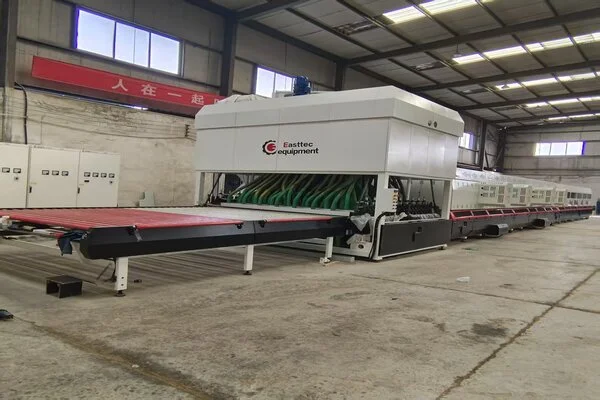
A Forced Convection Double Chamber Machine for Low-E glass tempering is a furnace with a pre-heating chamber, a high-heating chamber, and a blower that circulates hot air around the glass. Low-E coatings reflect heat, so radiation alone heats them slowly and unevenly. Moving air carries heat to the surface at a steadier rate, and two chambers process two batches at once. Easttec states that this layout cuts the heating cycle by 50% compared with standard lines. In this article, I explain how the system works, how to compare models, what to ask suppliers, and how to keep the furnace running well.
Understanding Forced Convection Double Chamber Machines in Low-E Glass Tempering
Why Is Low-E Glass Hard to Heat?
Low-E glass has a very thin layer of metal or metal powder on top of it that reflects long-wave infrared heat. If you don't cover clear glass, its emissivity is about 0.84. With soft-coat Low-E, it can drop to 0.04 or less. That low of a number on the window saves energy, but the glass in a kiln also takes in a lot of direct heat. In an oven that only uses radiation, the covered side might be behind the bare side. It might cause a bow, a roller wave, or a dusty haze. For building and insulated glass work in the US, steady warmth is just as important as speed because flaws in either can lower yield and cause orders to be late.
How Does True Forced Convection Work?
With a high-temperature fan, true forced convection moves hot air around inside the stove. This system was made by Easttec using Italian convection technology. For convection, the frames and parts are made of ceramics that can stand up to 1300°C. If air moves across the glass, it gets hot, so both sides warm up at about the same rate. With Easttec's grid radiant heating, the temperature is more evenly spread out during both steps of heating. Together, they cut down on the time it takes to warm up and the difference between areas that are protected and those that are not. Strong and flat glass needs to be well above 600°C before it cools down quickly, so a steady heat curve is important.
What the Two Chambers Do?
This is the line that goes from warm to final cooking. One batch bakes in the high-heat room, and the next batch warms up in the pre-heat chamber. Easttec says that because both chambers work together, the heating cycle is half as long as it would be with a regular line. The last step takes longer for the glass to warm up because it is already warm when it gets there. The glass will stay flat, and there will be less thermal shock. In a skilled IPC machine, both chambers are always watched, and the timing of the quenching section is planned. I like this way of picturing it: when one load is finished, the next one is already waiting in line, so the furnace is never empty.
Comparison and Selection Criteria of Forced Convection Double Chamber Machines
Double Chamber vs. Single Chamber
It takes one chamber furnace to heat each batch from room temperature to tempering temperature. While the first batch is getting hot, the next batch has to wait outside. With two chambers, the work is split up. Two groups go through at the same time, which is how Easttec says it can make 1.8 to 2 times as much as a normal single-chamber furnace. The pre-heating stage also lets the temperature rise slowly, which is good for big, thin architecture lights. In exchange, you have to keep and handle more gear. For plants that need more room but don't want to double the floor space, a Forced Convection Double Chamber Machine is often a better option than adding a second single-chamber line.
Forced Convection vs. Radiation-Only Heating
Heaters that only use light need heating parts to work in a Forced Convection Double Chamber Machine. A layer of coated glass bounces back heat, so workers often have to slow down the process or risk more damage. With a forced convection heater, hot air that is always moving is added. This takes the heat right to the surface. That means a plant can use one line to make more types of glass, like clear, colored, and covered glass. Easttec has very good software that lets customers work with glass that is 4 mm to 19 mm thick. Even though good process control is still important, engineers can start making heating recipes with more freedom when they use convection.
Key Specifications to Check
These are the main things I tell people to look at first when they want to buy a heater.
- Thickness window and speed: The furnace can handle glass that is between 4 mm and 19 mm thick, which means it can be used for building projects, furniture, and appliances. Most large architectural lites have cycle times between 4 mm and 6 mm, so ask about those. Also, make sure you can change the temperature curve to fit the thickness you need.
- Energy performance: Find out how the heater keeps the heat inside. Easttec's insulation keeps 20% more heat in and helps customers save one-third of their electricity, according to the company. You can compare how much power you use now per square meter of glass to any number you ask for during the test.
- Controls and safety: Look for an industrial PC that can watch both chambers at once and handle the timing with the quenching section. You won't have to worry about touchscreen lag with Easttec's IPC unit. Check to see if it has the CE mark and see what language menus it has. It helps them learn how to use the system faster when they can speak the same language as it.
You can cut down on the number of suppliers on your list with these checks.
Procurement Considerations and Market Factors
Understanding Cost and ROI
Prices depend on the kiln size, the glass size, how the heating is set up, and any extras you pick, like power packs and language packs. Even though they cost more, a double-chamber line is a better investment because it gives you a better return on your money. If a line makes 1.8 to 2 times as much glass as a single-chamber furnace, then as the kiln fills up, the cost of the tools per square meter of glass goes down. It pays off even more if the yield goes up and heat loss goes down by 20%. People who want to buy from me should not believe what a supplier says in general. Instead, they should make a simple model with their own order number, power rate, and present yield.
Lead Time, Customization, and US Power Needs
It is possible to order a tempering oven. Easttec takes between 60 and 120 working days to get to you, so plan your installation around that time frame. You can change the voltage and frequency (220V, 380V, 415V, 50/60Hz), as well as the size, heating and cooling curves, and color of the equipment. Most power sources in the US run at 60 Hz, so you should say what voltage and phase your place has in the first question. Also, let us know early on what size glasses you want and how much each day. The size of the furnace and the heating curve are based on this information. You can choose from choices in English, Spanish, Portuguese, and more on the automatic multi-language menu. This is helpful in shops where people speak different languages.
Supplier Credibility and After-Sales Support
Since 1994, Easttec has been focused on glass strengthening technology. They use quality control standards from Europe, specifically Italy. Its goods meet the standards set by the CE. To work together, you need to ask some basic questions, plan the project, and choose the best design. The next steps are to agree to work together, make the product, install it, and test it. After the sale, there will be training on how to use it and service. You can get help online seven days a week, 24 hours a day. People who want to buy something should ask to see the factory or try out the tools and write down the parts list, training plan, and guarantee terms before they sign. This is because most processes for making decisions last between 3 and 12 months. It means the seller trusts their products and customer service team if they say yes to these needs.
Maintenance and Operating Habits for Long-Term Efficiency
Routine Cleaning and Inspection
It's best for a Forced Convection Double Chamber Machine when air can flow freely. At the end of each shift, the areas where people load and unload should be cleaned of broken glass and other trash. Every so often, you should check the fan, air ducts, rollers, thermocouples, and heating elements. If dust or broken glass gets in the way of the airflow, cold spots can form. Also, rollers that are worn out can leave marks on glass. Do what it says in the care guide that came with the machine and make sure you regularly adjust the temperature monitors. The ceramic parts in Easttec's furnaces can handle a lot of heat, and the furnaces are easy to clean. As a safety measure, write down the motor and temperature readings. Even small changes can often let you know before something breaks.
Troubleshooting Uneven Heating
The glass comes out with a bow, a wave, or stress that isn't even. I do the things on my short list. First, take another look at the load pattern. If it's not set up right, air can't move. Next, check to see if the fan and airflow are clear. Next, look at the recipe again and compare the temperatures in the chamber. Check out the roller speed and the roller surface's condition as well. Last but not least, check the quench section's cooling pressure. Both heating and cooling must happen at the same time for the tempering to be good. Tests showed that the fix worked. The ASTM C1048 standard says that fully hardened glass must have a surface tension of at least 69 MPa. The EN 12150-1 standard says that the glass must not break. These checks let you know if the glass is up to par.
Operator Training and Uptime
It's hard for many plants to find skilled workers, so training is just as important as hardware. This company, Easttec, says that new workers can learn how to run and fix machines in just one week. Its software also helps staff work with glass of different sizes. Along with setting up and starting up, training is a key part of working together. You can get help online seven days a week, 24 hours a day, so when something goes wrong, you don't have to wait as long. Also, I believe you should get a list of spare parts before they are delivered and keep the broken ones on site. Each shift always does the same things because there is a short written repair plan. Scheduled maintenance stops are cheaper than unplanned ones, and they protect your customers' shipping dates.
Future Trends in Forced Convection Double Chamber Technology
Smart Controls and Remote Monitoring
Many companies that make tools now add a lot of extras to their tempering lines, such as data logging, recipe files, and the ability to do diagnostics from afar. When engineers connect to the IoT, they don't have to walk to the heater to check on alarms and temperatures. On a double-chamber line, these tools help spread the load evenly between the two chambers and find drift early. The IPC-based control at Easttec already lets you manage both the chambers and the quenching section from a single computer. Techs can be reached online 24 hours a day, seven days a week. Find out what data the new furnace saves, how long it keeps that data, and how an expert can connect to fix issues when you look at it. You can tell how ready a source is for connected workplaces by how well they answer.
Lower Energy Use
The electricity is one of the most pricey parts of tempering glass, and rates vary a lot from US state to state. Fewer kilowatt-hours are used per square meter of glass when there is better insulation, more even power flow between rooms, and better control of heat. By managing power well, Easttec makes sure that electricity gets to both rooms and that 20% less heat is lost. Now, a lot of builders and building owners have green goals for Low-E glazing projects. The lower energy use helps them meet those goals. When you get quotes, make sure you ask each one how much power they use per load at the normal glass thickness. Don't just look at the tag's connected load.
Modular Layouts and Durable Materials
Modules are being used in more and more burner plans because plants want to be able to add more space in the future. Fumes run for a long time at temperatures close to the melting point, so iron and steel need to be strong. Easttec's ceramic convection parts can handle temperatures of up to 1300°C. The company changes the size of the equipment, the heating curves, and the cooling factors for each job. If you think the number of orders will go up, let your provider know when you plan the project. The plan will be able to grow this way. It doesn't cost much to plan ahead for floor space, power, and cooling air needs. This keeps changes from being made after installation that cost a lot. Because of the furnace, the plant has more room for new work. It was picked for today's sales and growth for next year.
Conclusion
The biggest problem with tempering Low-E glass is that covered glass radiates heat back into space, so it needs more stable heat transfer. What you need is a Forced Convection Double Chamber Machine to fix this. Forced hot air is moved across the glass, and two batches are worked on at the same time in the tanks that heat up first. There is more capacity, less thermal shock, and better flatness with this layout than with single-chamber and radiation-only furnaces. People should check out the controls, license, power, wait time, service terms, and range of thicknesses before they buy. To figure out ROI, they should then use their own statistics. Standards like ASTM C1048 and EN 12150-1 make sure that proper cleaning, inspection, and training of operators protect both quality and downtime. Better tracking, less energy use, and arrangements that can be changed are all things that future systems might be able to do.
FAQ
Does forced convection help with Low-E glass?
Yes. Hot air moving over the covering still brings heat to the surface. This reduces the temperature difference between the parts that are treated and those that are not. The temperature curve is even in both steps when convection and matrix radiant heating work together.
What glass thickness can the furnace process?
This line from Easttec can work with glass from 4 mm to 19 mm thick. Building lites between 4 mm and 6 mm can be made quickly. Easttec also says that it can hold 1.8 to 2 times as much as a normal single-chamber furnace.
Can the furnace run on US power?
Electricity and frequency can be changed by Easttec to 220V, 380V, 415V, and 50/60Hz. When they ask, tell them what the power and phase are where you are. The final design is ensured during the planning phase of the project.
How long does delivery take?
Each heater is made just for you. It takes between 60 and 120 business days, depending on the type. Plan the delivery times to fit in with that window.
What support follows the purchase?
Installation, setup, user training, and live expert help are all things that Easttec does 24 hours a day, seven days a week. When people work together, they get trained. In just one week, a new operator can learn how to run and fix things.
Contact EASTTEC EQUIPMENT for a Forced Convection Double Chamber Machine Quote
Are you ready to get the best deal on a Forced Convection Double Chamber Machine? One of the things that EASTTEC EQUIPMENT has to offer is Italian convection technology. They also offer CE-compliant design, deep customization, and online help 24 hours a day. If you email sales@easttecmachine.com with your glass sizes, thickness range, and voltage, we'll help you figure out what to do. To find out more, visit easttecglass.com or call and ask about a tour of the plant or a show of how to use the tools.
References
1. ASTM International, Standard Specification for Heat-Strengthened and Fully Tempered Flat Glass (ASTM C1048), 2018.
2. European Committee for Standardization, Glass in Building – Thermally Toughened Soda Lime Silicate Safety Glass, Part 1 (EN 12150-1), 2015.
3. American National Standards Institute, Safety Glazing Materials Used in Buildings (ANSI Z97.1), 2015.
4. Karlsson, J. and Roos, A., "Annual Energy Window Performance vs. Glazing Thermal Emittance," Thin Solid Films, 2001.
5. Haldimann, M., Luible, A., and Overend, M., Structural Use of Glass, IABSE, 2008.
6. Varshneya, A. K., Fundamentals of Inorganic Glasses, Society of Glass Technology, 2006.

USER EVALUATE
Here is the customer's evaluation of us