




Forced Convection Double Chamber Machine for Thick and Thin Glass
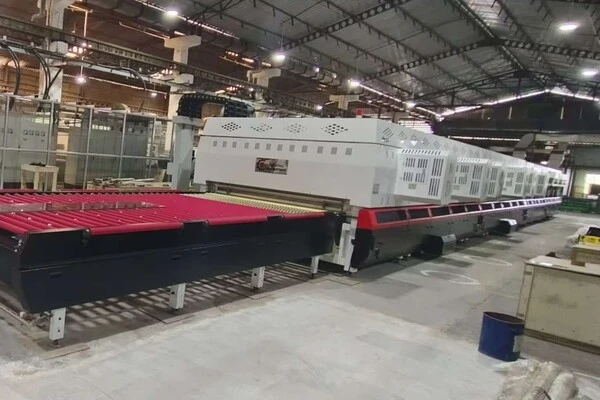
A Forced Convection Double Chamber Machine for thick and thin glass is a tempering furnace that splits heating into two chambers. A pre-heating chamber warms the glass, and a high-heating chamber finishes the job. A high-temperature blower circulates hot air inside the furnace, and two batches run at the same time. Our version handles glass from 4 mm to 19 mm and cuts the heating cycle by 50% compared with standard lines. In this guide, I explain how the machine works, how it compares with other furnaces, how to run it, how to buy it, and where it fits.
Understanding Forced Convection Double Chamber Machines
How Does Forced Convection Heat Glass?
To temper glass, first heat a sheet of glass above 600°C and then quickly cool its surfaces with air. The main thing that clear glass does is reflect heat. Many of those rays are reflected by coated glass, like Low-E, making it heat less evenly. This issue can be fixed with forced convection. A high-temperature blower moves hot air through the furnace. The glass gets hot through both moving air and radiation. The convection parts are made of ceramic that can handle temperatures up to 1300°C. This cuts down on lost energy and speeds up the cooking process. Our method is based on convection technology from Italy and quality management that meets European standards. We have been hardening glass since 1994.
Why Two Chambers Instead of One?
Each load goes into a single-chamber furnace, heats up, and then leaves before the next load can begin. The warming stage is different from the final heating stage in our Forced Convection Double Chamber Machine design. The pre-heating chamber slowly warms the glass up, and the high-heating chamber finishes the cycle. The next batch is already warming up while the first one is still being heated up. When compared to regular lines, the heating cycle is cut in half because both chambers work together. 1.8 to 2 times as much can be made as with a regular single-chamber burner. The slow rise in temperature also lowers thermal shock and stress, which helps keep the surface flat and free of distortion better than rapid heating in a single stage.
Thick Glass and Thin Glass Need Different Care
It takes longer for thick glass's core to warm up than its surface because it holds more heat. Glass that is thin can bend or show roller waves if the heat isn't spread out evenly. This machine works with glass that is 4 mm to 19 mm thick and goes very fast on the 4 mm to 6 mm ornamental lites that many plants make in large quantities. The thermal profile of both stages of our matrix radiant heating system is the same. People who work with our tools can also work with glass of different sizes. Since there isn't a different line for each, one furnace can cover furniture glass, utility glass, and structural glass.
Comparing Forced Convection Double Chamber Machines with Alternative Technologies
Double Chamber vs. Single Chamber Furnaces
A single-chamber furnace is easier to use and can work for a shop that doesn't make a lot of things. Time to bake is the price to pay. One area of the furnace heats up the glass at a time, and the next batch can't go in until the first batch is clear. A Forced Convection Double Chamber Machine design can handle two batches at once and has 1.8 to 2 times the capacity. It also lets a plant make more without having to double its floor space, which is useful in places where space is limited. The extra output is easy to use if you consistently order a lot of 4 mm to 6 mm lites. A single room might be enough for you if you only process a few sheets every day.
Convection vs. Radiation-Only and Natural Air Movement
Furnaces that use radiation only have heating elements that send heat toward the glass. When a Forced Convection Double Chamber Machine doesn't use forced air, the air inside moves more slowly and unevenly on its own. A blower is added to forced convection to move hot air around the chamber. This is most important for Low-E glass and other coated glass that bounces back light. These methods don't soften glass because they're used for other things and aren't part of this comparison. When you are looking at stoves, you should ask each one how the convection works, what the parts made of the convection are made of, and how the heating zones are managed.
Brand, Warranty, Price, and Service Factors
The comparison is more than just specs. Think about more than just the buy price when you judge. It depends on how much electricity is used per square meter, how much is made, how much is needed for repairs, and how well the operators are trained. Our energy-saving design is meant to help people save one-third of the electricity they use, and our insulation stops heat from escaping by 20%. We offer installation, commissioning, training for operators, and online support 24 hours a day, 7 days a week. Get a written copy of the guarantee terms and a list of spare parts from each seller. You are also welcome to visit the plant and watch the tools in action before you make a decision.
Operation and Troubleshooting of Forced Convection Double Chamber Machines
Pre-Operation Checks
A good run starts before the Forced Convection Double Chamber Machine gets hot. As you turn the ceramic rollers, make sure they don't have any glass dust or chips on them. These can leave marks on the glass. As the blowers spin, make sure they don't make any strange noises or vibrations. Check the wiring and heating elements against the manufacturer's list, and make sure the air supply to the quenching section is on. Look over the last shift's alarm log on the IPC workstation and load the right recipe for the thickness of the glass. A short list that the operator signs at the start of each shift saves time and helps find problems before they stop the line.
Parameter Settings and Step-by-Step Running
The settings vary by finish, thickness, and size. When heating, thicker glass needs more time, while when heating smaller glass, tighter control is needed to keep it flat. We set up the size, heating curves, and cooling parameters of the equipment to fit the needs of your product. There are five steps to a normal run:
- Clean the glass and look it over.
- Put it on the conveyor belt.
- Put it through the chamber that warms it up first and then the chamber that heats it up most.
- Move on to the cooling part.
- Look over the finished sheets.
The Industrial PC manages the timing and makes sure that both chambers and the quenching section work together. You can also keep an eye on both rooms at the same time without any input lag. Changeover time is cut down by grouping layers that are similar in one run.
Troubleshooting Common Faults and Spare Parts
Most issues about quality can be traced back to a few main reasons. Roller wave and distortion are often caused by rollers that are too dirty or worn out, uneven heating, or leaving the glass in the kiln for too long. When two surfaces bow, it means that the heat is not spreading evenly between them. Damage to the edges before tempering or the wrong heating curves can cause more breakage. In that order, check the rollers, then the heating curves, and finally the airflow. Wear parts like ceramic rollers and heating elements should be kept on hand so that a small problem doesn't turn into a long stop. Our technicians offer online support 24 hours a day, seven days a week, and new operators can learn how to run and fix machines in just one week.
Procurement Considerations for Forced Convection Double Chamber Machines
Match Capacity and Specifications to Your Orders
Start with your mix of products for a Forced Convection Double Chamber Machine. Write down your range of thicknesses, your biggest sheet size, the number of square meters you process each day, and the finishes you work with. Make sure that your range is between 4 mm and 19 mm for this Forced Convection Double Chamber Machine. Then guess how much space you want to add. You can plan for growth without having to double your floor space because the double chamber design gives you 1.8 to 2 times the capacity of a normal single-chamber furnace. Take these numbers to your supplier and ask them to give you an idea of how long your most common products will take to heat up. It is much easier to compare quotes when you use real numbers from your own sales.
Customization for US Plants
Plants are different, so the tools you use should be right for the plant. Tell us what your plant gives us so we can make the power system work with voltage and frequency standards around the world, like 220V, 380V, 415V, and 50/60Hz. The size, heating curves, and cooling parameters of the equipment should all match the requirements of the product. Languages like English, Spanish, Russian, Korean, Portuguese, and more are on the operating menu, which helps crews who speak different languages. We can also paint the equipment the color you want, train you on how to use it, and help you after the sale. Also, people in the US should make sure that the finished glass meets ASTM C1048 and, for safety glass, ANSI Z97.1 and 16 CFR 1201 when they apply.
Delivery, Process, and Support
Because tempering furnaces are made to order, shipping can take anywhere from 60 to 120 business days, based on the model. Add that time frame to your job plan. From the first question through project design, optimal design, the partnership agreement, production, installation, and testing, operator training, and service after the sale, we do everything in one place. The machine meets CE standards, and experts are available online 24 hours a day, 7 days a week. It can take months to decide what equipment to buy in this category, so we welcome factory visits and equipment demonstrations. Before agreeing, your team can see the build and ask questions in person.
Industry Applications and Future Trends
Furniture and Interior Glass
Glass shops that work with furniture and interiors cut glass of all shapes and sizes for things like countertops, cabinet doors, shelves, and shower walls. In the US, safety window rules, such as 16 CFR 1201 and ANSI Z97.1, say that glass in dangerous places like shower walls has to meet these requirements. A common way to get to that safety level is to temper. As long as the Forced Convection Double Chamber Machine can handle 4 mm to 19 mm, one line can cover both thin cabinet panels and thick tabletops. Our software works with glass of different thicknesses, which is good for shops that get mixed orders and small batches.
Appliance and Architectural Glass
Manufacturers of appliances need oven glass, refrigerator glass, range hood panels, and washing machine panels that are all flat. For both business and domestic projects, builders order structural glass and large amounts of 4 mm to 6 mm lites. The two-stage heating method lowers thermal stress, which helps keep the surface flat and free of warping. EN 12150-1 describes thermally toughened safety glass for architectural work, including how it breaks. In the US, ASTM C1048 describes fully tempered and heat-strengthened flat glass. Processors that work with more than one industry can put these goods on the same line and sort them by recipe.
Energy Efficiency and Digital Control Trends
Energy cost is what most heater choices are based on. In its process heating guidance, the U.S. Department of Energy names furnace wall losses and opening losses as frequent sources of waste. This means that insulation is important. Our insulation makes it 20% easier for heat to escape, and the smart power management system splits electricity between the chambers to lower the cost per square meter of running the building. Plants also want to be able to see their lines better. Our IPC workstation keeps an eye on both chambers at all times, which helps with planning production. As buyers pay more attention to uptime and energy use per square meter, twin-chamber furnaces with good controls are a good choice.
Conclusion
The heating is split between a pre-heating chamber and a high-heating chamber in a Forced Convection Double Chamber Machine. A high-temperature blower moves hot air around the machine. Compared to standard lines, our design cuts the heating cycle by 50%. It also has 1.8 to 2 times the capacity of a single-chamber burner and 20% less heat loss through insulation. It can work with glass that is 4 mm thick up to 19 mm thick on a single line. This makes it useful for making furniture, appliances, and buildings. For best results, check the rollers and blowers often and make sure the heating curves are right. Buyers should make sure that the delivered glass meets standards like ASTM C1048 and ANSI Z97.1. They should also make sure that the capacity, voltage, and delivery time of the glass match their orders. All of these things show that a twin-chamber furnace is good for factories that need to make more and keep the quality high but don't have a lot of floor space.
FAQ
Can one kiln work with both thin and thick glass?
Yes, anywhere from 4 mm to 19 mm. Set the heating curves based on the thickness, and put together runs with similar thicknesses to cut down on changeover time.
How much faster is it than a single-chamber furnace?
It can hold 1.8 to 2 times more. Two batches run at the same time, and the heating cycle is half as long as on a regular line.
How long does it take to learn how to deliver and be an operator?
Depending on the type, delivery takes between 60 and 120 business days. Within a week, new operators can learn how to run and fix things, and technicians are available online 24 hours a day.
Does the machine follow safety rules?
The machine meets the requirements of the CE. People in the US should also make sure that the finished glass meets ASTM C1048 and, if needed, ANSI Z97.1.
Contact EASTTEC EQUIPMENT for a Forced Convection Double Chamber Machine
Are you ready to expand without taking up twice as much space? EASTTEC EQUIPMENT makes Forced Convection Double Chamber Machines and has been tempering glass since 1994. They offer unique voltage, language, and color choices and have online help 24 hours a day. If you email sales@easttecmachine.com with your glass sizes, thickness range, and daily output, our team will help you choose a setup. You can find out more at easttecglass.com.
References
1. ASTM C1048 Standard Specification for Heat-Strengthened and Fully Tempered Flat Glass, ASTM International, 2018
2. EN 12150-1 Glass in Building: Thermally Toughened Soda Lime Silicate Safety Glass, Part 1, European Committee for Standardization, 2015
3. ANSI Z97.1 Safety Glazing Materials Used in Buildings, American National Standards Institute, 2015
4. 16 CFR Part 1201 Safety Standard for Architectural Glazing Materials, Code of Federal Regulations, 2023
5. Improving Process Heating System Performance: A Sourcebook for Industry, U.S. Department of Energy, 2016
6. Fundamentals of Inorganic Glasses, Society of Glass Technology, 2006

USER EVALUATE
Here is the customer's evaluation of us