




How Does Top Convection Curved Glass Tempering Machine with Flexible Roller Improve Efficiency?
If you process curved glass at scale, you already know that heat consistency and mechanical precision are what separate profitable runs from costly rejects. A top convection curved glass tempering machine with flexible roller technology directly addresses both challenges — delivering faster heating cycles, lower energy overhead, and the forming freedom that modern architectural and automotive glass demands. In this article, I walk through exactly how this equipment works, where it outperforms older approaches, and what to look for when selecting your next furnace.
Understanding the Convection Curved Glass Tempering Machine with Flexible Roller
The Convection Heating Principle
For forced convection heating, a high-temperature fan moves hot air around inside the building, covering all the glass surfaces with a uniform layer of heat. This method gets rid of cold spots that cause uneven stress distribution compared to radiant-only systems. In real life, temperature control accuracy is ±1°C across the heating chamber. This directly lowers optical distortion and surface defects, which is an important feature whether you are making Low-E curtain wall glass or oven door panels.
The Flexible Roller Mechanism
Fixed roller beds work well for flat glass, but when the glass starts to bend, they create pressure points in certain places that leave surface marks and stress cracks. A PLC link lets a flexible roller system change its curve digitally, so it can fit the goal radius without having to change the mold itself. Flexible high-strength shafts can bend around a minimum radius of 450 mm to 1,000 mm, depending on the thickness. This gives production teams the mechanical range they need to handle a wide range of orders.
Key Components and Safety Compliance
The heating system, roller transport bed, quench section, and Industrial PC (IPC) control unit of the top convection curved glass tempering machine with flexible roller work together as a single integrated system. The top convection curved glass tempering machine with flexible roller uses ceramic materials for the convection blowers, ducts, and chamber linings, allowing these components to withstand temperatures of up to 1,300°C. This material selection supports stable operation under demanding thermal conditions and helps maintain the durability of the top convection curved glass tempering machine with flexible roller. Every machine made by EASTTEC EQUIPMENT is built according to applicable CE directives, and the top convection curved glass tempering machine with flexible roller is designed to meet relevant European safety requirements. For international buyers, choosing a top convection curved glass tempering machine with flexible roller with CE-related compliance documentation can simplify equipment evaluation and support procurement for overseas projects.
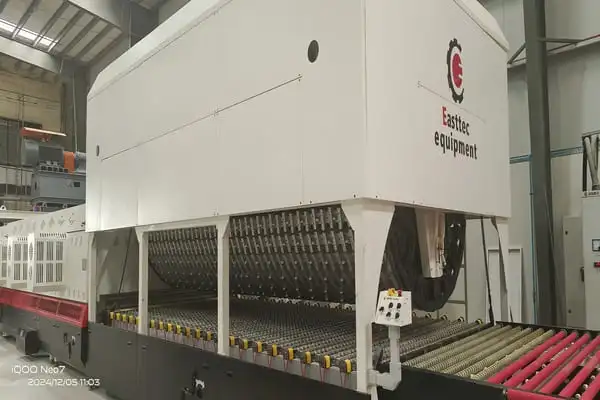
How Efficiency Is Improved by Convection Heating and Flexible Rollers
Faster Heating Cycles and Energy Reduction
At EASTTEC EQUIPMENT, the high-pressure convection system makes heating cycles 30% faster than models that only use radiant heat. That saved time directly leads to more batches per shift. Also, better chamber insulation and temperature management cut energy loss by 20% compared to regular furnace designs. This meant that less power was used each month without affecting the quality of the glass.
Fewer Rejects and Higher Yield
Breakage and warping rates go down a lot when heat is spread out evenly, and roller pressure changes to fit the shape of the glass. When working with Low-E glass that has an emissivity of as little as 0.01, the convection method stops the film from oxidizing while it's being heated. This is a flaw that means whole batches have to be thrown away in radiant furnaces. Higher yield rates mean less loss and a faster return on the investment in cash.
Simplified Operation and Reduced Downtime
These are the main operating benefits that have a direct effect on how efficiently daily production runs:
- IPC Recipe Storage: The Industrial PC stores and recalls complex bending recipes instantly, so operators do not re-enter parameters between jobs. New operators can reach full working proficiency within one week.
- Multi-Language Interface: The control menu supports English, Spanish, Russian, Korean, Portuguese, and additional languages, removing the language barrier for international production teams.
- Reduced Mechanical Wear: Because the flexible roller adjusts progressively rather than forcing glass against a fixed mold, wear on contact surfaces is lower, extending service intervals and cutting spare-parts costs.
Because the flexible roller adjusts slowly instead of pressing glass against a set mold, there is less wear on the areas that come into contact with the glass. This means that the machine doesn't need to be serviced as often and extra parts are cheaper.
Comparing Top Convection Curved Glass Tempering Machines in the Market
Technology Differentiators That Matter
True forced convection is not always used in machines that are marketed as convection bending furnaces. Some designs combine radiant elements with partial convection to assist the heating process, but this approach can still create temperature differences across large-format glass. In contrast, a top convection curved glass tempering machine with flexible roller uses forced convection, with ceramic-rated fans circulating heated air throughout the heating zone to promote more uniform temperature distribution. This design allows the top convection curved glass tempering machine with flexible roller to provide controlled heating conditions for demanding curved glass applications. For high-yield production lines, the combination of forced convection and flexible roller forming can make the top convection curved glass tempering machine with flexible roller a practical option for manufacturers processing different glass sizes and shapes. Easttec Equipment has been using Italian convection technology since 1994, giving the company more than 30 years of experience with this type of equipment. This experience supports the development and production of the top convection curved glass tempering machine with flexible roller for manufacturers seeking established convection-based glass processing technology.
Thickness Range and Product Flexibility
A business that processes glass doesn't usually only make one type of product. The EASTTEC curved tempering furnace can work with glass thicknesses ranging from 4 mm to 19 mm, all in one machine. It can handle decorative interior panels, heavy structural curtain wall units, automotive glass, and solar panel substrates without the need for separate equipment lines. When order mix changes throughout the year, that processing window is very helpful.
ROI Considerations for Procurement Teams
In the glass business, choices about buying capital equipment are usually thought over for three to twelve months, which is the right amount of time. When comparing machines, it's not just the buying price that matters. The cost of energy per square meter handled, the rate of rejects, the frequency of downtime, and the cost of tooling changes are also important. The flexible roller design gets rid of the need for physical molds, which can save a business several thousand dollars a year if it deals with a wide range of bending radii.
Practical Guide to Selecting and Maintaining Your Tempering Machine
Evaluating Production Requirements Before Purchase
Start with your real order mix: the sizes of glass you usually work with, the range of curvatures your clients ask for, and the number of square meters you want to produce each day. A machine that is the right size for your number will not be underused and won't have capacity problems. Make sure the supplier can change the voltage configuration. For example, EASTTEC EQUIPMENT supports 220V, 380V, and 415V at 50/60 Hz, so the furnace can be installed without having to change the electrical system.
Maintenance Practices for Convection and Roller Systems
A few important areas are the focus of routine maintenance on these tools. To keep the radius accuracy within 0.5 mm, servo motors that control roller curvature need to be calibrated on a regular basis. Regular checks should be done on the heat-resistant bearings in the bending section, and thermal cycle checks on the heating elements can catch resistance drift before it changes the even temperature. By lubricating the roller transport drive parts as directed by the manufacturer, you can avoid the kind of mechanical wear that stops production for a small change.
Long-Term Performance and Upgrade Path
As part of its standard service package, EASTTEC EQUIPMENT offers online technical support 24 hours a day, seven days a week for the top convection curved glass tempering machine with flexible roller. This support includes installation, commissioning, and operator training, helping customers bring the top convection curved glass tempering machine with flexible roller into operation more smoothly. This after-sales support system gives manufacturers access to technical assistance without requiring a specialist to remain on site full-time. As production requirements grow, the IPC platform of the top convection curved glass tempering machine with flexible roller can be updated with new software and additional process parameters without requiring hardware changes. This upgrade flexibility allows the top convection curved glass tempering machine with flexible roller to adapt to changing production requirements while maintaining the existing equipment configuration. For manufacturers planning long-term equipment use, the top convection curved glass tempering machine with flexible roller can provide both ongoing technical support and software-based process flexibility.
Applications and Future Trends in Curved Glass Tempering Technology
Current Application Sectors
Curved tempered glass made in convection furnaces is used in architecture for things like cylindrical curtain walls, canopy glass, and facade panels. It is also used in automotive and marine for things like windshields, side windows, and screens for luxury yachts. It is also used in commercial refrigeration for things like curved display cabinet doors and in appliance manufacturing for oven and range hood panels. The convection-plus-flexible-roller method can meet all of the optical clarity and fragment density requirements set by each sector, as long as they are in line with EN 12150 and SGCC standards.
Industry 4.0 Integration
Connecting the IPC control system to factory-level data networks is the next step in the growth of this type of equipment. This will allow real-time tracking of heating zone temperatures, roller position data, and energy consumption metrics. Premium furnaces already have smart sensor systems that can spot heat problems before they hurt the quality of the glass. These features cut down on waste even more and give production managers the information they need to keep improving recipes.
Sustainability Pressures and Equipment Response
Energy rules are getting stricter all the time in North America and Europe. The fact that EASTTEC EQUIPMENT's furnace is designed to lose 20% less energy is not just a cost argument; it is also a compliance argument. As regulatory thresholds drop over the next few years, processors that buy equipment that uses less energy will have to do fewer retrofits.
Conclusion
When you combine forced convection heating with a customizable flexible roller system, a top convection curved glass tempering machine with flexible roller can deliver practical efficiency benefits, including stated heating cycles that are up to 30% faster and energy loss that is reduced by 20%. The top convection curved glass tempering machine with flexible roller can also reduce the need for physical molds when producing different curved glass shapes, while supporting glass thicknesses from 4 mm to 19 mm in one machine. These capabilities make the top convection curved glass tempering machine with flexible roller suitable for factories producing Low-E architectural glass, automotive glass, and appliance panels, where consistent quality and efficient production are important. For manufacturers handling different glass specifications, the top convection curved glass tempering machine with flexible roller provides an integrated approach to heating, bending, and tempering. EASTTEC EQUIPMENT has been manufacturing this type of equipment for more than 30 years and provides CE compliance and after-sales support for the top convection curved glass tempering machine with flexible roller. For long-term production planning, the top convection curved glass tempering machine with flexible roller can help manufacturers manage multiple glass applications on a single flexible production platform.
FAQ
What advantage does a flexible roller offer over a fixed roller in curved glass tempering?
A flexible roller adjusts its curvature digitally, distributing contact pressure evenly across the glass surface during bending. Fixed rollers apply force at fixed points, which creates localized stress and surface marks. The flexible design reduces breakage and optical defects, improving yield rates and product consistency across different radius specifications.
What maintenance does a convection bending furnace require?
Key maintenance tasks include calibrating the servo motors that control roller curvature, inspecting heat-resistant bearings in the bending section, checking heating element resistance at scheduled intervals, and lubricating the roller transport drive. Following the manufacturer's maintenance schedule keeps radius accuracy within 0.5 mm and temperature uniformity within ±1°C.
How does convection heating compare to radiant heating for curved glass?
Radiant heating transfers energy directly from elements to the glass surface, which can leave temperature gradients on larger or curved pieces. Forced convection circulates hot air throughout the heating chamber, producing a more uniform thermal profile. This results in faster heating cycles — up to 30% faster — and better stress distribution in the finished glass, reducing defect rates.
Can one machine process both thin decorative glass and heavy structural panels?
Yes. The EASTTEC curved tempering furnace processes glass from 4 mm through 19 mm within the same equipment, covering decorative interior glass at the thin end and structural curtain wall or solar panel glass at the heavier end.
Partner With EASTTEC EQUIPMENT for Your Next Curved Glass Tempering Furnace
Since 1994, EASTTEC EQUIPMENT has been making heat processing equipment for glass. Our Top Convection Curved Glass Tempering Machine with Flexible Roller is the result of all that experience. As a trusted Top Convection Curved Glass Tempering Machine with Flexible Roller, we provide CE-certified furnaces with full customization, operator training, and 24-hour technical support. Please email our team at sales@easttecmachine.com right away to get a full quote or set up a technical meeting.
References
1. Glass Technology: European Journal of Glass Science and Technology — Society of Glass Technology, 2021.
2. Tempering Technology and Glass Processing Quality Standards — Glass Processing Industry Report, National Glass Association, 2022.
3. Energy Efficiency in Industrial Thermal Processing Equipment — American Council for an Energy-Efficient Economy (ACEEE), 2023.
4. EN 12150-1: Glass in Building — Thermally Toughened Soda Lime Silicate Safety Glass — European Committee for Standardization (CEN), 2019.
5. Industry 4.0 Applications in Glass Manufacturing — International Journal of Advanced Manufacturing Technology, 2022.
6. Curved Glass Market: Global Production Trends and Processing Technology Review — Freedonia Group Industry Study, 2023.

USER EVALUATE
Here is the customer's evaluation of us