




How Does Radiation Flat & Bend Glass Tempering Furnace of Flexible Roller Process Complex Glass Shapes?
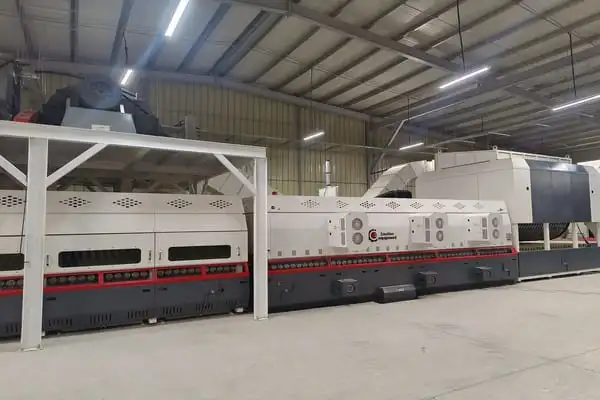
A Radiation Flat & Bend Glass Tempering Furnace of Flexible Roller processes complex glass shapes by combining matrix radiant heating with an adjustable roller bending mechanism. Glass enters the heating chamber, where multi-zone infrared radiation brings it to 680°C–720°C with a uniformity tolerance within ±2°C. Once softened, servo-controlled flexible rollers gradually transition from a flat to a calculated arc configuration, forming the desired curvature without mold changes. Rapid air quenching then locks the shape and builds surface compressive stress, producing tempered curved glass that meets EN 12150-1 and ASTM C1048 standards.
Understanding Radiation Flat & Bend Glass Tempering Furnace Technology
Radiation heating moves heat around the furnace chamber's ceiling and floor using infrared elements set up in a grid design. This method sends heat directly to the surface of the glass instead of relying on moving air. This makes temperature response faster and more accurate than with normal convection alone.
How Matrix Radiant Heating Works
Easttec's multi-zone matrix radiant heating splits the heater into temperature zones that can be controlled separately. Based on the position, thickness, and target temperature of the glass, each zone changes its output in real time. This zoned control stops cold spots at the edges and overheating in the middle, which are two of the most common reasons why curved glass doesn't look right.
The Flexible Roller Bending Mechanism
Rigid fixed-radius models can be replaced by high-strength, heat-resistant rollers with Kevlar- or ceramic-coated tubes in the flexible roller system of the Radiation Flat & Bend Glass Tempering Furnace of Flexible Roller. A servo motor adjusts the angle of each roller along a flexible shaft, allowing the Radiation Flat & Bend Glass Tempering Furnace of Flexible Roller to change the conveyor bed from a flat configuration to an arc radius as low as 450 mm. This adjustment can be controlled automatically through the HMI, allowing the Radiation Flat & Bend Glass Tempering Furnace of Flexible Roller to switch between different forming configurations within minutes. As a result, manufacturers can reduce the need for manual tool changes between production runs. For glass processors handling different flat and curved glass requirements, the Radiation Flat & Bend Glass Tempering Furnace of Flexible Roller provides.
Temperature Control and Process Stability
A PLC link and an industrial PC (IPC) keep an eye on the thermocouple input in all heating zones all the time. The system keeps track of hundreds of production recipes, which lets workers quickly remember exact heating curves for glass thicknesses ranging from 5 mm to 19 mm, types of glass, and curvature goals. With this amount of control, process variation is kept to a minimum over long shifts of output.
Advantages of Radiation Flat & Bend Glass Tempering Furnaces in Flexible Roller Processes
Picking the correct tempering technology has a direct effect on the return rate, the cost of energy, and the schedule for output. Here are some of the main benefits this type of equipment offers:
- Exceptional Bending Versatility: The adjustable high-strength flexible roller system accommodates diverse curvatures that rigid systems physically cannot reach. Architectural processors can handle custom skylight profiles, curved facade panels, and decorative interior glass within the same production line, reducing equipment investment and floor space requirements.
- Precision Matrix Thermal Control: Easttec's signature multi-zone matrix radiant heating ensures uniform thermal absorption across the entire glass sheet. This precise heat distribution prevents optical distortion and surface "ghosting," producing smooth, visually clear surfaces that satisfy elite architectural and automotive glass specifications.
- 20% Thermal Energy Savings: High-density composite insulation engineered into the furnace structure reduces heat loss by 20% compared to traditional models. This thermal retention keeps the furnace environment stable between cycles, which lowers electricity consumption during peak production hours and reduces long-term operating costs measurably.
- Robust IPC and PLC Reliability: Driven by a stable Industrial PC and PLC interface, the system maintains 24/7 operational stability. Operators store and recall hundreds of recipes, making the changeover between flat and bent glass production fast and repeatable without depending on experienced senior operators for every adjustment.
The biggest problems with deep-processing glass are inconsistent quality, high energy costs, slow changeovers, and the need for skilled labor. These benefits directly fix these problems. Facilities that use this type of oven say they reject fewer units and can fill special orders faster.
How Radiation Flat & Bend Glass Tempering Furnace of Flexible Roller Works Step-by-Step
The procurement and engineering teams can figure out if this technology fits their workflow better if they know how the production process works.
Stage 1 — Loading and Pre-Heating
Automatically, sheets of glass are loaded onto the flat roller conveyor of the Radiation Flat & Bend Glass Tempering Furnace of Flexible Roller. The IPC identifies the active production recipe and starts heating the chamber to the target temperature. In the Radiation Flat & Bend Glass Tempering Furnace of Flexible Roller, individual zones of radiant heating elements are activated according to the selected process parameters, while the glass moves through the heating chamber at a controlled speed based on its thickness and composition. The automated controls of the Radiation Flat & Bend Glass Tempering Furnace of Flexible Roller help maintain consistent heating conditions throughout the process. As the glass progresses through the furnace, the Radiation Flat & Bend Glass Tempering Furnace of Flexible Roller coordinates heating parameters with the selected recipe to support stable and repeatable production. This controlled process allows the Radiation Flat & Bend Glass Tempering Furnace of Flexible Roller to handle different glass specifications while maintaining an efficient production workflow.
Stage 2 — Bending and Full Tempering Temperature
The servo-controlled flexible rollers start moving to the set arc profile as soon as the glass reaches the softening point, which is between 680°C and 720°C. The bending action is slow and in sync with the speed of the glass, so stress doesn't build up at the sides. During this time, the temperature uniformity limit stays within ±2°C.
Stage 3 — Quenching and Shape Locking
As soon as the glass is bent, high-pressure air blasts from grids of nozzles above and below it at the same time. The compressive surface stress must be above 90MPa for fully tempered safety glass, which is what ISO standards say should happen. During this phase of cooling, the curved shape sets in stone. The digital analysis of curvature shows that the variation of the arc stays within ±1mm per meter.
Selecting the Right Radiation Glass Tempering Furnace for Complex Glass Shapes
Before deciding on a seller, procurement managers looking at bent glass tempering tools should think about a number of practical issues.
Thickness Range and Glass Compatibility
Make sure the oven can handle the full range of thicknesses needed for your production. Easttec's flat and bend model reliably works with glass thicknesses from 5 mm to 19 mm, which includes architectural, appliance, and furniture glass. Clear float, tinted, and patterned glass are all compatible, so it can be used for non-coated types in a number of different industries.
CE Certification and Global Compliance
When equipment is manufactured according to applicable CE safety directives, the Radiation Flat & Bend Glass Tempering Furnace of Flexible Roller is designed to meet relevant electrical, mechanical, and thermal safety requirements. This is especially important for factories that supply finished glass products to European or North American markets, where the compliance documentation of the production equipment may form part of the overall project or quality assessment. For manufacturers evaluating the Radiation Flat & Bend Glass Tempering Furnace of Flexible Roller, clear CE-related documentation can help support equipment qualification and international procurement requirements. The Radiation Flat & Bend Glass Tempering Furnace of Flexible Roller can therefore provide manufacturers with a processing solution designed with applicable safety requirements in mind. For export-oriented glass processors, selecting a Radiation Flat & Bend Glass Tempering Furnace of Flexible Roller with appropriate compliance documentation can help simplify equipment evaluation and project planning.
After-Sales Support and Delivery Schedule
Tempering kilns for glass are custom-made pieces of capital equipment. Delivery times range from 60 to 120 working days, based on how the order is set up. Make sure the provider offers installation help, training for operators, and online technical support 24 hours a day, 7 days a week after the system is up and running. Because equipment downtime affects order completion directly, being quick after the sale is not just a matter of choice, but also of money.
Future Outlook and Technological Trends in Radiation Glass Tempering Furnaces
For modern exterior windows and transportation systems, the architectural glass market wants curved, high-performance glazing more and more. The global architectural glass market was worth more than USD 93 billion in 2023, according to Grand View Research. It is still growing, with bent and specialty glass categories growing faster than flat glass categories.
There are three ways that flexible roller furnace technology is getting better. First, AI-assisted recipe management will let furnaces automatically change their heating rates based on data from real-time glass surface temperature measurements. This will cut down on setup time even more. Second, goals for low-carbon industry are pushing researchers into insulation materials to find ways to keep heat in even better. Third, connecting to Industry 4.0 platforms for monitoring production will let remote diagnostics and planned maintenance happen more often, reducing unplanned downtime.
With its 20% energy savings, IPC-controlled recipe management, and CE-compliant building, Easttec's current design fits right in with these trends.
Conclusion
A radiation-based flat and bend tempering furnace with a flexible roller system can address issues that are difficult to solve with rigid processes that rely on fixed molds. The Radiation Flat & Bend Glass Tempering Furnace of Flexible Roller can process glass thicknesses ranging from 5 mm to 19 mm in both flat and curved configurations. With controlled heating, the Radiation Flat & Bend Glass Tempering Furnace of Flexible Roller can maintain temperature uniformity within ±2°C, while high-density insulation can help reduce energy loss by up to 20%, according to the stated equipment specifications. The IPC and PLC control system of the Radiation Flat & Bend Glass Tempering Furnace of Flexible Roller allows production recipes to be managed automatically rather than relying entirely on manual operator adjustments. CE-related compliance also supports equipment evaluation for international markets. For glass producers working with building facades, skylight panels, automotive glass, or specialty glass products, the Radiation Flat & Bend Glass Tempering Furnace of Flexible Roller provides a flexible processing platform designed to support production capacity.
FAQ
How does the flexible roller prevent surface marks on curved glass?
High-temperature Kevlar or ceramic-coated sleeves on the rollers protect the glass surface while it is being bent. Accurately synchronizing the speed of the roller spin with the speed of the glass's movement stops any relative motion that could lead to scratches or "white haze" flaws.
Can this furnace process tinted or patterned glass?
Yes. The furnace can work with different kinds of glass, including clear float, tinted, and patterned glass. The multi-zone heating control changes the amount of heat sent to each zone to take into account how different colors and shapes of glass absorb heat.
How long does it take to switch from flat to bend production mode?
With servo-controlled rollers and IPC recipe memory, the HMI interface can automatically change the setup in less than five minutes. This cuts down on the time it takes to make runs of flat and curved glass.
What happens during a power outage?
The furnace has a UPS backup for the PLC and a pneumatic emergency drive system. This keeps all the glass in the heating chamber from ejecting safely, which keeps the rollers from getting damaged and stops material loss.
What bending radius can this system achieve?
Depending on the width of the glass, the flexible roller system can bend it to a radius as low as 450 mm, which is small enough to meet most building and automobile needs.
Contact EASTTEC EQUIPMENT for Your Next Radiation Tempering Furnace
Since 1994, EASTTEC EQUIPMENT has been making heat processing equipment for glass. They use European-style quality management and have worked on dozens of production lines around the world. You can get our Radiation Flat & Bend Glass Tempering Furnace of Flexible Roller from a reliable source. It can be fully customized to fit your voltage needs, production capacity, and glass specs. Ask our engineering team for advice or find out about our technical support program that's available 24 hours a day, 7 days a week. Please email us at sales@easttecmachine.com; we answer all questions quickly.
References
1. Grand View Research. Architectural Glass Market Size, Share & Trends Analysis Report. 2023.
2. Glass International. Advances in Roller Hearth Tempering Furnace Technology. 2022.
3. European Committee for Standardization. EN 12150-1: Glass in Building — Thermally Toughened Soda Lime Silicate Safety Glass. 2015.
4. ASTM International. ASTM C1048: Standard Specification for Heat-Strengthened and Fully Tempered Flat Glass. 2018.
5. Journal of Non-Crystalline Solids. Thermal Stress and Bending Behavior in Curved Tempered Glass Panels. Elsevier, 2021.
6. Glass Processing Days Conference Proceedings. Flexible Roller Technology for Complex Curvature Glass Tempering. Tampere, Finland, 2019.

USER EVALUATE
Here is the customer's evaluation of us