




How Does Radiation Precision Flexible Roller Flat & Bent Glass Tempering Line Improve Production Control?
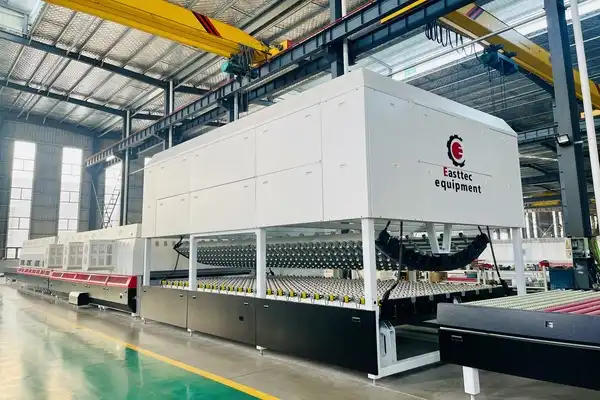
The Radiation Precision Flexible Roller Flat & Bent Glass Tempering Line improves production control by integrating multi-zone matrix radiant heating with an adjustable flexible roller system. This combination delivers temperature accuracy within ±1°C across the furnace width, enabling consistent thermal absorption for both flat panels and curved glass with bending radii from 400mm to 3,000mm. The IPC and PLC control architecture allows operators to store and recall hundreds of production recipes instantly, reducing changeover time significantly. Together, these features minimize glass breakage, prevent optical distortion, and maintain process stability across varying glass thicknesses from 5mm to 19mm.
Understanding Radiation Precision Flexible Roller Glass Tempering Technology
Most traditional tempering furnaces use convection or basic electric resistance heating, which aren't always good at evenly heating complex glass shapes. The radiation precision flexible roller system fills this need by mixing high-performance radiant heating elements with a roller bed that can be adjusted automatically.
How Radiation Heating Works in This System
Radiation heating uses infrared elements to send heat straight to the glass surface, while convection heating moves warm air around. With this straight transfer method, the heater can respond to heat more quickly and control the temperature more precisely zone by zone. What this means is that the heating is more even from edge to center, which is important for both bigger building panels and thin car glass.
The Role of the Flexible Roller Architecture
This line is different from regular rigid-bed furnaces because it has an adjustable high-strength flexible roller system. Rollers made of materials that can withstand high temperatures can change their shape on the fly to fit different curve needs, and can usually handle bent radii between 400mm and 3,000mm. This means that the same machine can make both flat glass and curved glass for buildings or cars, without having to change the molds.
Integrated IPC and PLC Control
Easttec equips the Radiation Precision Flexible Roller Flat & Bent Glass Tempering Line with a stable Industrial PC (IPC) and PLC connection to support reliable production control. This architecture is designed for continuous operation and avoids relying solely on touchscreen-based controls, which can provide greater operational stability for demanding production environments. With the Radiation Precision Flexible Roller Flat & Bent Glass Tempering Line, operators can switch between flat and bent glass production by selecting saved recipes and adjusting the required process parameters. The IPC-based control system of the Radiation Precision Flexible Roller Flat & Bent Glass Tempering Line can store a large number of production recipes, allowing operators to quickly retrieve the appropriate settings with only a few inputs. For manufacturers handling many different glass specifications, the Radiation Precision Flexible Roller Flat & Bent Glass Tempering Line provides a practical way to organize production recipes and maintain consistent process parameters. By combining IPC and PLC control with recipe-based operation, the Radiation Precision Flexible Roller Flat & Bent Glass Tempering Line can simplify production changes while supporting stable day-to-day operation.
Production Control Challenges in Traditional Glass Tempering Lines
Before you can fully understand what this technology can do, it's helpful to know what problems manufacturers actually face every day.
Inconsistent Heating Across Glass Surfaces
Usually, conventional batch kilns create temperature differences on the surface of the glass. These differences in temperature cause uneven stress, which can cause roller wave distortion, visual flaws, and even breakage after installation in the worst cases. For factories that make curtain wall panels or windshields for cars, even small visual errors lead to expensive rejects.
Limited Flexibility for Curved Glass Production
Rigid roller beds can't change to fit different curve profiles without having to be rearranged by hand, which takes time, or without having separate mold sets for each type of product. Because of this rigidity, many companies that work with glass have to run different production lines for flat and bent glass, which costs more money and takes up more floor space.
Operational Downtime and Changeover Losses
It's very important to keep your glass processing business running smoothly because every hour of downtime means lost revenue. Batch processing systems need time to cool down between runs, and when changing products, changing parameters by hand can lead to mistakes. Over time, these inefficiencies add up and hurt both output and earnings margins.
How the Radiation Precision Flexible Roller Tempering Line Improves Production Control
This part directly answers the main question with specific technical proof.
Here are the main ways this system improves the performance of production operations:
- Precision Matrix Thermal Control: Easttec's multi-zone matrix radiant heating system achieves temperature uniformity with accuracy of ±1°C across the furnace width. This precise heat distribution prevents "ghosting" and optical distortion, producing surfaces that comply with EN 12150 and ASTM C1048 fragmentation and strength standards. Processors handling clear float, tinted, and patterned glass all benefit from this consistency.
- Two-in-One Processing Capability: The flexible roller design processes both flat panels and high-curvature bent glass within a single production line. Glass thicknesses from 5mm to 19mm are supported, covering architectural, automotive, appliance, and furniture glass applications. This eliminates the need for separate dedicated lines and reduces overall capital investment.
- 20% Thermal Energy Savings: High-density composite insulation reduces furnace heat loss by 20% compared to traditional models. This thermal retention keeps operating temperatures stable with less energy input per cycle, lowering electricity consumption and long-term operational costs substantially for high-volume facilities.
- Smart Recipe Management: The IPC and PLC interface stores hundreds of product recipes. Switching between flat and bent glass production typically takes less than 15 minutes, with parameters adjusted automatically by the control system rather than by manual operator input.
These benefits directly address the three main problems we talked about earlier: heating that isn't consistent, not being able to bend glass, and long changeover times. Facilities that use this equipment say they get higher yields and can plan their production schedules better.
Real-World Application Evidence
When producing architectural facades, the Radiation Precision Flexible Roller Flat & Bent Glass Tempering Line can handle both large flat panels and custom-curved corner units while supporting consistent optical quality across different glass shapes. For automotive applications, the Radiation Precision Flexible Roller Flat & Bent Glass Tempering Line can be used to process side windows and sunroofs that require precisely controlled curves for their intended applications. In appliance manufacturing, the Radiation Precision Flexible Roller Flat & Bent Glass Tempering Line is suitable for products such as oven doors and curved refrigerator panels where appearance, dimensional accuracy, and resistance to thermal stress are important. By combining flat and curved glass processing capabilities within one production system, the Radiation Precision Flexible Roller Flat & Bent Glass Tempering Line provides manufacturers with greater flexibility across architectural, automotive, and appliance applications. For companies producing multiple glass products with different shapes and specifications, the Radiation Precision Flexible Roller Flat & Bent Glass Tempering Line can support a more adaptable production workflow.
Comparison and Decision-Making: Radiation Precision Flexible Roller vs. Traditional Technologies
Productivity and Thermal Precision
Continuous operation mode in radiation-based systems gets rid of the need for batch furnaces to cool down for short periods of time. This means that more glass will be made each shift, and the temperature will change less between batches. Digital tools for measuring roller waves show that the peak-to-valley surface distortion stays below 0.05mm. This is a standard that rigid-roller group systems don't always meet.
Cost-Benefit Analysis for B2B Buyers
Buying a basic convection furnace is less expensive than buying a flexible roller radiation line. However, the 20% less energy used during each production cycle, along with lower failure rates and the elimination of the need for multiple specialized lines, usually results in a good return on investment over the life of the equipment. Because the single-line is so flexible, facilities that work with different kinds of glass in the architectural and automotive sectors can get their money back faster.
Criteria for Selecting a Reputable Manufacturer
Procurement managers should check that suppliers have CE certification, can adapt to different voltages (220V, 380V, 415V, 50/60Hz), offer local language interface options, and can provide installation, commissioning, and technical training after the sale. Since the beginning, Easttec has helped clients in foreign markets with these customization and service options.
Procurement and Implementation Guide for B2B Clients
Key Procurement Factors to Evaluate
Before you send out an RFQ, make sure that the supplier of the Radiation Precision Flexible Roller Flat & Bent Glass Tempering Line can meet your specific requirements for glass thickness, curvature, facility voltage, and production capacity. When evaluating a Radiation Precision Flexible Roller Flat & Bent Glass Tempering Line, ask the supplier for relevant CE documentation, fragmentation test results where applicable, and references from installations with similar production requirements. It is also important to confirm the equipment's heating configuration, flexible roller specifications, control system, and available technical support before placing an order. Customized Radiation Precision Flexible Roller Flat & Bent Glass Tempering Line projects usually require careful planning because delivery can take between 60 and 120 working days, depending on the configuration and manufacturing schedule. For buyers managing a new production line or facility expansion, the Radiation Precision Flexible Roller Flat & Bent Glass Tempering Line should therefore be evaluated together with installation requirements, commissioning time, and operator training. Considering these factors early can help manufacturers plan procurement and production schedules more effectively when investing in a Radiation Precision Flexible Roller Flat & Bent Glass Tempering Line.
Integration and Workforce Training
When adding a flexible roller radiation line to an existing production floor, the layout needs to be planned out so that materials can move as smoothly as possible. Easttec sends experts to the spot to do the installation and start-up. With the help of a multilingual interface that comes in English, Spanish, Russian, Korean, Portuguese, and other languages, new operators can become functionally proficient in one week.
Preventative Maintenance to Sustain Process Control
For high-precision tasks, it is best to have automatic roller adjustment checks once a week. For as long as the equipment is in use, geometric accuracy is maintained by a full mechanical check of the movable roller system every six months. Unbalanced cooling forces can cause glass to twist, but differential pressure tracking during quenching stops this from happening.
Conclusion
The Radiation Precision Flexible Roller Flat & Bent Glass Tempering Line is designed to address several common challenges in glass production, including inconsistent heating, limited flexibility when processing curved glass, and production delays caused by equipment changeovers. The line combines an IPC/PLC control platform, a dynamically adjustable flexible roller bed, and multi-zone matrix radiant heating to support controlled flat and bent glass processing. With the Radiation Precision Flexible Roller Flat & Bent Glass Tempering Line, production managers and technical teams can monitor key operating parameters and manage different process recipes through the integrated control system. The flexible roller configuration of the Radiation Precision Flexible Roller Flat & Bent Glass Tempering Line allows manufacturers to handle different glass shapes without relying on separate fixed molds for every curvature profile. For companies producing furniture, appliance, automotive, and architectural glass, the Radiation Precision Flexible Roller Flat & Bent Glass Tempering Line can provide a more adaptable production solution within one integrated line. By combining flexible forming, zoned radiant heating, and IPC/PLC-based control, the Radiation Precision Flexible Roller Flat & Bent Glass Tempering Line can help manufacturers manage different glass specifications while maintaining a more consistent production workflow.
FAQ
How does radiation heating compare to convection heating for glass tempering?
Radiation heating targets the glass surface directly through high-intensity infrared elements, offering tighter zone control and faster thermal response. Convection systems circulate heated air, which works well for general heating but can introduce surface temperature variation on complex geometries. Radiation precision control is particularly effective for thin glass, where premature surface softening is a risk.
Can the flexible roller system handle complex curved glass without surface marking?
Yes. The high-temperature-resistant roller materials are selected to avoid surface contact marks on the glass during the bending process. The system maintains geometric precision with edge lift within 0.1% of total panel length, which prevents installation gaps in architectural and automotive applications.
What is the typical lead time and warranty coverage?
Delivery time depends on the specific configuration but generally ranges from 60 to 120 working days for customized units. Easttec provides after-sales technical support, including 24-hour online assistance. Warranty terms and specific coverage details are confirmed during the quotation process based on equipment configuration.
How quickly can the line switch between flat and bent glass production?
The PLC control system adjusts the flexible roller bed position and tempering parameters automatically. The transition typically takes less than 15 minutes, making mixed-production schedules practical without significant throughput loss.
Partner With EASTTEC EQUIPMENT for Your Next Tempering Line Investment
Every project that EASTTEC EQUIPMENT works on is backed by more than 30 years of experience in heat processing glass. Our Radiation Precision Flexible Roller Flat & Bent Glass Tempering Line for sale can handle glass widths from 5 mm to 19 mm, is CE-approved, and can be fully customized to fit the power, language, and production needs of your facility. Get in touch with our technical team right away to get a detailed quote and a demonstration of the equipment. Email your question to sales@easttecmachine.com, or go to our website to see all of our products and ask for a session.
References
1. Glass Technology: European Journal of Glass Science and Technology, 2022.
2. ASTM International — ASTM C1048: Standard Specification for Heat-Strengthened and Fully Tempered Flat Glass, 2018.
3. European Standard EN 12150-1: Glass in Building — Thermally Toughened Soda Lime Silicate Safety Glass, 2015.
4. ECE Regulation No. 43: Uniform Provisions Concerning the Approval of Safety Glazing Materials, United Nations Economic Commission for Europe, 2021.
5. Glass Processing Days Conference Proceedings: Advances in Flat and Bent Glass Tempering Technologies, 2019.
6. International Journal of Applied Glass Science: Thermal Processing Uniformity in Radiation-Based Glass Furnaces, 2021.

USER EVALUATE
Here is the customer's evaluation of us