




How Does an Advanced Low-E Double Chamber Tempering Machine Process Energy-Saving Glass?
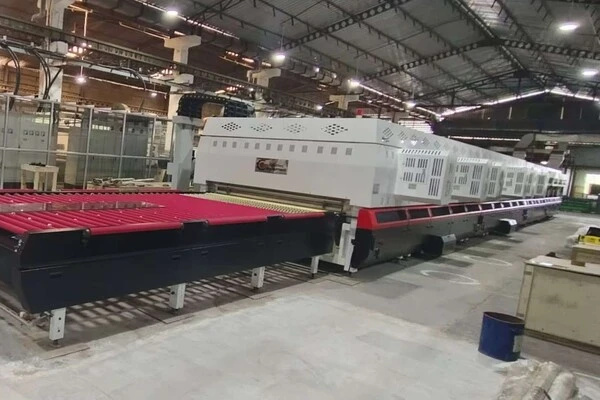
In two controlled heating stages, an Advanced Low-E Double Chamber Tempering Machine works with energy-efficient glass. The glass first goes into a pre-heat chamber. There, forced convection heat slowly raises its temperature and keeps the coating safe. The sheet is then moved to a chamber with a lot of heat, which evenly brings it to the tempering temperature. The glass is then quickly quenched by air headers. This makes the compressive stress that makes it safety glass. So, output goes up and energy loss goes down as one batch pre-heats and another reaches the final temperature. I'll go over each step below, along with some things that people in the US should look for before they buy.
How a Double-Chamber Furnace Treats Low-E Glass
Why Low-E Glass Requires Specialized Tempering Equipment
A Low-E coating is a thin layer of metal or metal oxide that lowers the amount of heat that escapes. The emissivity of uncoated float glass is about 0.84, but it is much lower for coated glass. This means that less radiant heat passes through an insulating glass unit. The furnace has a problem with the same property. Since the coating bounces back infrared energy, a furnace that only uses radiation will heat coated sheets slowly and sometimes unevenly. If the glass is too thin, too big, or high-performance, it shows the problem first through optical distortion, roller waves, damage to the coating, or long cycle times. Also, heat and handling affect soft-coat and hard-coat products in different ways. This is fixed by a high-tech double-chamber design that combines controlled radiation, convection, insulation, and automation. Different manufacturers use different chamber layouts, so I tell buyers to look at validated results instead of configuration names.
How the Low-E Glass Tempering Process Works Step by Step
It starts with a loading table for an Advanced Low-E Double Chamber Tempering Machine. The glass is loaded on to high temperature ceramic rollers and each batch can be traced through a barcode or production management system to ensure traceability. The first chamber is heated in a controlled manner to gradually increase the temperature of the glass and avoid thermal shock. The second chamber of the Advanced Low-E Double Chamber Tempering Machine heats the glass sheet to the required tempering temperature that, for soda-lime glass, is well above 600°C. It also provides even temperature distribution over the entire surface. Each sheet must reach a stable temperature and shape before quenching, to guaranty consistent results. Air passing through the upper and lower headers rapidly cools the glass, freezing compressive stress into the glass surfaces. One of the major advantages of an Advanced Low-E Double Chamber Tempering Machine is this highly controlled process, especially when working with coated architectural glass. Once the finished items are off-loaded, the production team reviews the batch records, appearance, flatness, fragmentation, coating condition and dimensions. Standards such as ASTM C1048 and EN 12150 give important specifications for the quality assessment of finished tempered glass. An Advanced Low-E Double Chamber Tempering Machine combines controlled heating, efficient quenching and comprehensive quality inspection to ensure stable production performance, consistent glass quality and reliable processing results for manufacturers.
How the Double-Chamber Design Improves Energy Efficiency and Product Quality
A two-chamber furnace gives processors more control over the amount of heat, the flow of air, the temperature zones, and the recipes they use. With the right temperature settings, one machine can handle soft-coat, hard-coat, clear, tinted, reflective, and opaque glass. Radiation heats quickly and directly, while convection moves heat into coated or thin glass. Many modern systems use both of these methods together. Good insulation, chamber sealing, standby modes, and PLC or IPC power regulation all help keep heat in and power use down when the machine is not in use. Anisotropy, roller waves, edge breakage, and scrap are also cut down by even heating and balanced quenching. Because of these improvements, cost per square meter goes down because energy and materials aren't wasted on glass that doesn't work. This makes delivery more stable, which is important when a big order for a facade depends on just one tempering line.
Matching an Advanced Low-E Double Chamber Tempering Machine to Your Coatings and Product Mix
Soft-Coat and Hard-Coat Low-E Glass: Processing Differences
When soft-coat Low-E glass is sputtered on in a vacuum chamber, it can be damaged by heat, physical contact, contamination, and the wrong coating orientation. It needs stable temperature profiles, the right kind of convection, clean rollers, careful handling, and recipes that have been approved by the coating supplier. When floats are made, pyrolytically applying hard-coat Low-E glass makes the surface last longer. It still needs to be heated at the right speed, have a clean furnace, and be quenched in the right way. Claims of general compatibility do not promise that production will work. Before you buy, you should ask the seller to confirm the supported coating positions, sizes, thicknesses, heating methods, and warranty terms. One of the most reliable ways to make sure something is suitable is to test a sample with your own glass. This gives your technical team measured data instead of promises.
Advanced Low-E Double Chamber Tempering Machine Versus Other Furnace Configurations
When it comes to heating Low-E glass, a double-chamber furnace is usually more flexible than a single-chamber system. In exchange, you have to spend more money and do more complicated maintenance. The heating functions are even farther apart on a triple-chamber line, but it needs more floor space, more money, and more skilled workers. It works best for soft-coat, thin, large-format, or mixed production because it uses both convection and radiation. It's not enough to just compare labels; you also need to look at cycle time, usable square meters per hour, energy use, changeover time, and quality losses. The best option depends on the mix of products, the amount of space available, the expected growth, and the goals for return on investment. A plant that mostly works with thick, clear glass might not need the same layout as one that mostly works with triple-silver architectural glass.
Elite Two-Stage Heating from EASTTEC EQUIPMENT
The pre-heat and high-heat stages are kept separate in our Advanced Low-E Double Chamber Tempering Machine. One sheet gets to the tempering temperature in the second stage, while the next batch gets ready to be used in the first stage. Up to 1.8 to 1.9 times as much can be made as with a normal single-chamber furnace thanks to this parallel flow. High-temperature blowers create true forced convection, which moves hot air around inside both chambers. The convection parts are made of ceramic and can withstand temperatures up to 1300°C. Since the stages are separate, the glass softens evenly. The slow rise in temperature helps thin architectural glass between 4 mm and 6 mm the most. Our IPC controls the timing between both chambers and the quenching section, so operators don't have to make complicated changes by hand.
What to Check Before You Buy
Technical Specifications Buyers Should Review
A review of sound equipment talks about more than just the largest glass size and power installed. Check the minimum and maximum sizes, the range of thicknesses, the ability to work with shaped glass, the loading modes, the heating zones, the performance of convection, the accuracy of the temperature, the quench pressure, and the ability to control the upper and lower air separately. You should be able to store recipes, set alarms, keep records of production, do diagnostics, and connect to ERP or MES software if you need to. Lifecycle cost is also affected by mechanical details such as the type of rollers used, how they are accessed, how they are oiled, any safety interlocks, and maintenance reminders. Also, plan the site early. Before delivery, you need to pay attention to the floor space, foundation, electricity, compressed air, ventilation, access for transport, operator zones, and suggested spare parts.
How to Choose the Best Low-E Double Chamber Tempering Machine
Choose a machine that fits your products, your customers, and the market you think you'll have in three to five years. Distributors, OEM integrators, window manufacturers, curtain wall suppliers, and specialty glass producers all need a different mix of size, capacity, automation, and customization. Find out how long each type of glass takes to cycle, and then compare the theoretical, guaranteed, and usable output after scrap and changeovers. Energy, labor, maintenance, spare parts, installation, training, and the risk of downtime should all be added to the total cost of ownership. Strength of the supplier is just as important as machine data, so look at export experience, technical support, warranty coverage, OEM flexibility, and references. Technical directors care about quality, while plant owners care about return on investment. A good supplier can meet both needs.
Key Specifications of Our Machine
This is how our machine will answer those checks. One line can handle glass from 4 mm to 19 mm thick, so it can be used for both interior glass and large facades. The menu on the Industrial PC control system can be read in English, Spanish, Russian, Korean, Portuguese, French, German, and Turkish, among other languages. Our business says that new operators can learn how to run and fix things in just one week. Power can be set to 220V, 380V, or 415V at 50 or 60 Hz, so it can work with plants in the world. According to company data, our energy-saving design helps customers save one-third of the electricity they would have used otherwise. Advanced composite insulation also helps keep heat in. The equipment meets the requirements of the CE mark. Each furnace is made to order, and delivery takes between 60 and 120 working days, depending on the model.
Procurement, Risk, and Performance
Procurement, Shipping, Installation, and Commissioning
If you're going to be preparing an RFQ for an Advanced Low-E Double Chamber Tempering Machine, be sure to clearly list the types of glass, coatings, thickness, sheet sizes, production output goals, automation requirements, factory utilities, destination, and installation expectations. Ask suppliers to give you a detailed quotation for the main Advanced Low-E Double Chamber Tempering Machine, optional configurations, auxiliary equipment, shipping, insurance, installation, operator training, spare parts, taxes, delivery terms such as EXW, FOB, CIF or DAP. International buyers should also check container needs or provisions for oversized cargo, unloading equipment, foundation readiness, availability of electricity and compressed air and any applicable local regulations. If possible, schedule a factory acceptance test of an Advanced Low-E Double Chamber Tempering Machine using typical Low-E glass. Define exact acceptance criteria for glass quality, energy consumption, automation performance, remedial actions, final sign-off and production capacity. A professional supplier must be able to explain how the Advanced Low-E Double Chamber Tempering Machine is designed and configured to meet the buyer’s specific production requirements. Our one-stop service process includes: inquiry, project design, sign agreement, machine production, installation and commissioning, operator training, after-sales service. With this comprehensive strategy, customers purchasing the Advanced Low-E Double Chamber Tempering Machine can better control the cost of the project, minimize the risk of installation and achieve reliable long-term production performance.
Common Risks and How to Avoid Them
If you only choose the furnace with the lowest price, it may end up costing you more in the long run because of wasted energy, scrap, downtime, poor customer service, or limited product capabilities. The advertized capacity might not be based on your Low-E thickness, coating, size, or loading pattern, but on how clear the glass is in an ideal situation. If you skip coating tests, it could cause problems with the way things look, damage to the coating, poor fragmentation, or breakage. Before you sign, you should also think about utilities, floor space, air flow, spare rollers, service access, and operator training. There is less risk in buying something when there is a clear technical specification, sample trial, performance guaranty, commissioning plan, and agreement for after the sale. Our technicians are available online 24 hours a day, 7 days a week, and we welcome factory visits so that your engineers can look at the equipment in person before making a decision.
What Performance Results Should Buyers Expect?
An advanced double-chamber machine should provide more stable heating and quenching, better coating protection, fewer breaks, better flatness, and more consistent fragmentation if it is set up and run correctly. Operations can change recipes more quickly, do less work by hand, keep better records, and depend less on the skills of individual operators. Not just one big specification brings in more money; less waste, less rework, better use of labor, and lower energy per square meter do the rest. Check every claim with samples of the product, test reports, reference plants, measured energy data, and agreed upon acceptance criteria. Then, compare the results to the costs of your current equipment and the costs you knew before. That comparison makes it easy for plant managers and owners to figure out how much money they will get back.
Conclusion
An Advanced Low-E Double Chamber Tempering Machine works with energy-efficient glass by heating it in two stages: a slow pre-heat stage and a high-heat stage. The sheet is then quenched evenly. Low-E coatings work well with this design because they reflect infrared energy, which makes it harder for radiation-only furnaces to heat evenly. Flatness, less waste, and lower energy use per square meter are all helped by convection, insulation, and automated control. For soft-coat and hard-coat glass, you need different recipes, so real-world testing is more important than configuration names. Buyers should look at the features, the total cost of ownership, the delivery terms, and any risks, like unknown costs and coatings that haven't been tested. The most accurate way to see payback is through measured data from references, tests, and samples.
FAQ
Can a double-chamber machine process both soft-coat and hard-coat Low-E glass?
It is possible, but it depends on the type of coating, where it is placed, the size and thickness of the glass, the heating method, and tried-and-true recipes. Before you decide, ask for a test sample to be used with your own glass.
How should I measure energy performance?
Don't just look at installed power; also count how much electricity is used per square meter of finished glass. The outcome is affected by the insulation, the loading pattern, the cycle time, the controls, and the way the machine is used. According to company data, our design that saves energy helps customers cut their electricity use by one-third.
What affects price and installation time?
A quote that is tailored to the project is needed because of factors like capacity, level of automation, customization, shipping, and site readiness. Depending on the model, our custom-built furnaces are sent out in 60 to 120 business days.
Contact EASTTEC EQUIPMENT for an Advanced Low-E Double Chamber Tempering Machine
EASTTEC EQUIPMENT has been making Advanced Low-E Double Chamber Tempering Machines since 1994 and has a lot of experience with tempering glass. Send your glass types, thickness range, and desired output to sales@easttecmachine.com, and our engineers will come up with a custom configuration for you. You can also get help online 24 hours a day, 7 days a week. You can find out more about the products at easttecglass.com or set up a visit to the factory to see the machines in action.
References
1. ASTM International, ASTM C1048 Standard Specification for Heat-Treated Flat Glass—Kind HS, Kind FT Coated and Uncoated Glass, 2018
2. European Committee for Standardization, EN 12150-1 Glass in Building—Thermally Toughened Soda Lime Silicate Safety Glass, 2015
3. Schittich, Staib, Balkow, Schuler, and Sobek, Glass Construction Manual (Birkhäuser), 2007
4. Glass Association of North America, GANA Glazing Manual, 2008
5. Granqvist, C.G., Solar Energy Materials (Advanced Materials), 2003
6. ENERGY STAR, Program Requirements for Residential Windows, Doors, and Skylights, Version 7.0, 2022

USER EVALUATE
Here is the customer's evaluation of us