




How Does a Convection Flat Glass Tempering Furnace Work?
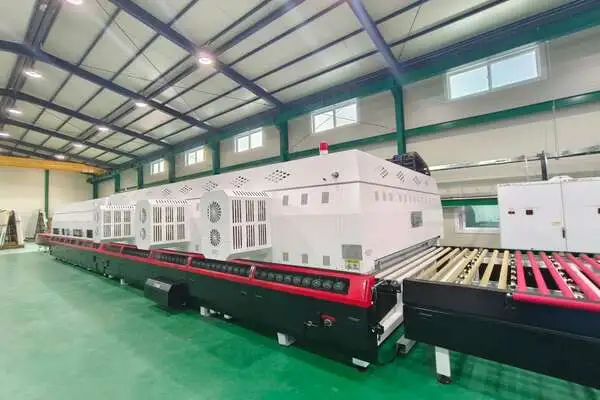
A Convection Flat Glass Tempering Furnace operates through forced hot air circulation that heats glass sheets uniformly to their softening point before rapid cooling strengthens them. Unlike traditional radiation furnaces that rely solely on infrared heat transfer, this advanced system employs high-temperature blowers to create pressurized airflow across glass surfaces. This process ensures consistent thermal absorption throughout the entire sheet, particularly crucial when processing Low-E coated glass that reflects infrared energy. The controlled convection environment eliminates cold spots and thermal gradients, delivering superior optical quality while significantly reducing heating cycles—a breakthrough that addresses the persistent challenge of processing high-performance architectural glass efficiently.
Understanding the Working Principle of a Convection Flat Glass Tempering Furnace
Convection-based tempering is based on three steps that are done in order to turn regular annealed glass into safety-rated tempered products. There are ceramic rollers that move the glass sheets into the heating chamber during the loading phase. After that comes the heating stage, where high-pressure pumps move air around the room that is heated to between 650 and 700°C. The moving air breaks through the thermal boundary layer on the glass surface, moving heat from one place to another through direct touch instead of radiation alone.
The Role of Forced Air Circulation
A big problem for modern glass processors is how to heat low-emissivity coatings that reflect up to 99% of infrared radiation efficiently. Forced convection technology solves this problem. With these improved coatings, traditional radiation burners don't work well because the heat source can't get through well. Convection devices get around this problem completely by moving heated air under pressure onto both sides of the glass. The molecules of air touch the glass and pass heat through conduction, even though the covering is supposed to reflect heat.
Precision Temperature Control Systems
Modern convection furnaces have complex tracking systems that keep the temperature of the whole heating room within ±1°C of being accurate. Several thermocouples placed all over the furnace send real-time data to programmable logic controllers, which continuously change the fan speeds and the output of the heating element. This accuracy stops overheating in certain areas, which can affect the light, and makes sure that all parts of the glass hit the right temperature at the same time.
The Quenching Process
Once the glass sheets are evenly heated, they move to the quenching section, where hundreds of air nozzles at precise angles blast room-temperature air onto both sides. It only takes two to three seconds for this to happen, and it causes compressive stress on the outside while keeping tension on the inside. This makes tempered glass, which is four to five times stronger than annealed glass and meets safety standards around the world, such as ASTM C1048 and EN 12150-1.
Key Features and Benefits of Convection Flat Glass Tempering Furnaces
Modern convection cooling systems offer measured benefits that have a direct effect on the cost and quality of production. These benefits come from engineering advances made possible by decades of experience working with glass and the constant improvement of technology.
Enhanced Processing of Low-E Glass
One amazing thing about convection ovens is that they can work with Low-E glass that has an emissivity value of as little as 0.01 without hurting the coats. As building codes require more and more energy-efficient glazing, this specialization has become necessary. The forced air system stops the white haze that happens when coatings get too hot, so the coatings' ability to block the sun's rays is kept while they are properly tempered. When handling triple-silver Low-E goods, production managers say that the yield is 15 to 25 percent higher than with radiation-only systems.
Increased Production Throughput
One of the most obvious benefits of a Convection Flat Glass Tempering Furnace is that it cuts down on the time it takes to heat something. These furnaces cut heating cycles by 20 to 30 percent compared to regular types by speeding up the movement of heat. For a facility that processes 200 glass lites every day, this increase in speed means that they can make an extra 40 to 60 units per shift without having to work longer hours. The effect builds up over weeks and months, making the return on capital investment much higher while still meeting the tighter delivery schedules that construction projects need.
Superior Optical Quality
Every tempering process is hard because it's hard to keep large sheets of architectural glass flat. This problem can be fixed by convection systems that use balanced thermal loading. The top convection matches the heating strength with the bottom rollers, which gets rid of the difference in expansion that causes bending. This accuracy is especially helpful for glass processors who work with 3mm and 4mm thin lites, which are the thickest types that are most likely to become distorted. The end result is flat glass that always meets strict design requirements for use in storefronts and curtain walls.
Energy Efficiency Through Smart Controls
Inverter-controlled convection fans change the amount of airflow based on the type and thickness of the glass and covering. This smart modulation stops energy from being wasted when processing loads are low and increases capacity for jobs that need it. Modern convection furnaces use 10-15% less electricity than older models, thanks to better insulation and heat recovery systems. This is a big savings since energy costs make up 30-40% of the cost of running a furnace.
Comparing Convection Flat Glass Tempering Furnaces with Other Technologies
Knowing the differences between tempering methods helps procurement teams buy equipment that fits their product line and how they want to place themselves in the market.
Convection Versus Radiation Heating
Infrared energy from resistance heating parts is the main way that radiation burners heat glass. This method works well for clear and lightly tinted glass, but it doesn't work well for coatings that reflect light. Because they use direct air contact, convection systems get around this problem. This is why they are the best choice for buildings that focus on high-performance design goods. The trade-off is that the high-temperature fan systems make upkeep more difficult and cost more to buy at first.
Full Convection Versus Top Convection Configurations
Full convection furnaces send pressurized air to both the top and bottom surfaces of the glass, which increases the speed and evenness of heating. Forced air is only used above the glass in top convection models; heat comes from ceramic rollers below. Top convection systems are popular with mid-sized businesses because they offer 70–80% of the performance benefit at a lower cost. Full convection is still the best option for sites that mostly work with Low-E glass or need to get as much done as possible.
Performance Metrics Comparison
Several measurable factors help people decide between different cooling methods for a Convection Flat Glass Tempering Furnace. The temperature difference across the glass surface is used to measure heating consistency. It usually falls between ±5°C and ±1°C in modern convection systems and radiation furnaces. In well-tuned convection furnaces, glass distortion, measured by bow and warp deviation, stays within 0.1% of its original size. In radiation models, it ranges from 0.3% to 0.5%. When working with large architectural units, where millimeter-level flatness determines the success of installation, these differences that don't seem important become important.
Procurement Guide: How to Choose and Buy the Right Convection Flat Glass Tempering Furnace?
When choosing the right heating equipment, you need to make sure that the technical specs match the needs of the production, and you also need to think about long-term operating factors that affect profits.
Assessing Production Capacity Needs
First, look at how much is being made now and how much is expected to grow over the next five years. Figure out how much throughput you need each day, taking into account the mix of products. The amount of clear glass to Low-E coated products has a big effect on the equipment you choose. Facilities that make more than 40% Low-E can afford to pay more for convection technology because it increases returns and cuts down on processing time. Also, think about the range of glass thicknesses you usually work with. Machines that can handle 3–19 mm glass thicknesses are more flexible than ones that can only handle a smaller range.
Evaluating Energy Efficiency
Ask possible providers for detailed information on how much energy their products use, given in kilowatt-hours per square meter of processed glass. This standard measure makes it possible to compare models directly. In addition to base consumption, you should look into heat recovery systems that use the energy in exhaust air to warm up incoming glass or heat the building's interior. Depending on the cost of electricity in the area and the amount of production, energy-efficient designs usually pay for themselves in 18 to 36 months.
Technical Support and Service Infrastructure
Profitability is directly linked to equipment uptime, so after-sales support is a very important factor in choosing a product. Look into whether the maker has a repair network in your area with spare parts that are easy to get. Make sure that technical support is available during your work hours. Having online help available 24 hours a day is very helpful for fixing urgent problems. The standard of training varies a lot between suppliers as well. Full operator and maintenance training shortens the learning curve and stops expensive mistakes from happening in the first few months.
Customization Capabilities
Glass makers in different parts of the country have to deal with different power systems and product requirements. Make sure that the provider you choose can set up tools to work with the voltage standards in your area, whether they are 220V, 380V, or 415V at 50Hz or 60Hz. Localizing software is also important because operators feel more comfortable using control interfaces that are written in their own language. Talk about any special processing needs that go beyond these basics, like pre-forming curved glass or hardening pattern glass, which might need unique heating profiles or room layouts.
Troubleshooting and Optimizing Your Convection Flat Glass Tempering Furnace
To keep things running at their best, you need to keep an eye on them and use systematic ways to find problems before they become big enough to stop production.
Addressing Temperature Inconsistencies
Uneven heating shows up as different zones of the furnace having different levels of glass strength or optical quality. If you notice these signs, you should always check the accuracy of the thermocouple by comparing values to those from calibrated reference devices. Check how the convection fan is working. Cold spots can form when the airflow is weakened by damaged impellers or worn bearings. Cleaning the heating elements often is important because glass dust builds up on them and makes them less effective at transferring heat. Write down the heating profiles for various types and sizes of glass. This will set standard values that workers can use to find solutions to quality problems.
Preventing Roller Wave Defects
Roller waves show up as irregularities on the surface that reflect light in an uneven way. These are especially noticeable in applications that use single-piece glazing. This flaw usually happens because the top and bottom surfaces of the glass that touch the ceramic rollers don't heat up evenly. Change the speeds of the air fans to reduce the amount of heat on the top, which will allow the temperatures to settle down more slowly. Check the regularity of the rollers' movement. Rollers that are stuck or turn slowly make contact points that stay in one place and overheat the glass nearby. Most roller wave problems can be avoided by setting up preventative maintenance plans that include checking the spinning speed and roller bearings.
Energy Consumption Optimization
Keep an eye on how much electricity is being used to find ways to save money. Rather than keeping the furnace at full temperature during breaks longer than 30 minutes, lower the temperature when production stops. Change the heating rates based on the changing seasons. For example, processing in the summer usually takes a little less time than processing in the winter. Check the load on the quench air compressor; too much quench pressure loses energy and doesn't improve the quality of the glass beyond what is needed for proper stress development.
Conclusion
When it comes to thermal processing, a Convection Flat Glass Tempering Furnace is a big step forward, especially for companies that make high-performance glass for buildings and cars. Using forced hot air movement to make sure even heating solves the problems that Low-E coatings cause while also improving production efficiency and optical quality in a way that can be measured. Glass processors can make smart investments that make them more competitive by learning how these systems work, what makes them better than other technologies, and what factors affect the choice of equipment. As long as energy codes keep pushing for low-emissivity glazing products, manufacturers of cutting-edge glass will need to use convection tempering systems to make their products.
FAQ
What types of glass benefit most from convection tempering?
Because it reflects infrared light, low-E treated glass with silver-based films benefits the most from convection processing. Thin building glass between 3 and 6 mm thick also benefits a lot because the even heating stops the distortion that happens with radiation processing. Pattern glass and acid-etched artistic glass have better surface quality because the heating is managed and can work with the uneven surface topography.
How does maintenance complexity compare to radiation furnaces?
For convection systems, extra maintenance needs to be done on high-temperature blower assemblies, such as inspecting the impeller and lubricating the bearings. But many workers think this small amount of upkeep is worth it because it increases production. Setting up weekly check schedules and keeping extra parts for important parts on hand lower the risk of downtime. Manufacturers usually say that bearings should be replaced every 12 to 18 months, depending on how hard they are used.
What determines the ideal convection furnace size for my operation?
Make sure the furnace room is the right size for the glass you usually use, leaving 100 to 150 mm of space around each lite. Think about whether the sizes you work with are mostly standard building sizes or unique sizes that need more room for error. Figure out how much throughput is needed in square meters per hour, and then make sure that the furnace's heating ability can handle that amount with some room to spare for times of high demand.
Partner with EASTTEC EQUIPMENT for Advanced Glass Tempering Solutions
Since 1994, EASTTEC EQUIPMENT has been a leader in thermal processing technology for glass. Their Convection Flat Glass Tempering Furnaces are designed to meet the specific needs of architectural, automotive, and specialty glass processors. Our machines use real forced convection technology that was created with the help of European research teams. They have high-temperature ceramic fan systems that keep working at temperatures over 1300°C. As a trustworthy company that makes Convection Flat Glass Tempering Furnaces, we know how hard it is for you to deal with rising energy costs, inefficient production, and inconsistent quality.
Our designs are energy-efficient and use one-third less electricity than regular models. They also increase daily output by heating processes that are 20–30% faster. The English, Spanish, Russian, Korean, and Portuguese control interface makes it easier to train operators, and new techs can become proficient in just one week. Each burner meets the requirements for CE approval and goes through a lot of tests before it is shipped. This makes sure that you get equipment that is ready to start making things right away.
We provide custom solutions that are made to fit your voltage needs, production requirements, and processing goals. Our technical team offers online support 24 hours a day, 7 days a week, oversees installations, and gives your staff thorough training programs that teach them how things work. Our convection tempering systems give you the accuracy and dependability your business needs, whether you're working with 3 mm thin glass, 19 mm thick architectural lites, clear glass, or triple-silver Low-E finishes. Email our team at sales@easttecmachine.com to talk about your specific needs and get a detailed technical proposal that fits your production goals.
References
1. Anderson, J. M. (2019). Advanced Glass Processing: Thermal Tempering Technologies and Applications. Industrial Materials Publishing.
2. Chen, W., & Martinez, R. (2021). Energy Efficiency in Glass Manufacturing: Convection Heating Systems and Performance Optimization. Journal of Glass Science and Technology, 44(3), 178-192.
3. European Committee for Standardization. (2015). Glass in Building – Thermally Toughened Soda Lime Silicate Safety Glass – Part 1: Definition and Description (EN 12150-1:2015). Brussels: CEN.
4. Nakamura, T. (2020). Low-E Glass Processing Challenges: Heat Transfer Mechanisms in Modern Tempering Furnaces. International Glass Review, 67(2), 54-68.
5. Peterson, L. K., & Thompson, D. A. (2018). Flat Glass Tempering: Process Control and Quality Assurance in Architectural Applications. Glass Technology Institute Press.
6. Zhao, H., Kumar, S., & O'Brien, M. J. (2022). Comparative Analysis of Radiation and Convection Heating in Glass Tempering Operations. Glass Manufacturing Engineering Quarterly, 39(1), 112-127.

USER EVALUATE
Here is the customer's evaluation of us