




Hard Roller Glass Machines Solve Arc Deviation in Mass Production
Arc deviation is one of the most costly quality failures in high-volume glass bending operations. When curved glass panels exit a furnace even slightly out of spec, entire production batches face rejection, assembly fitment failures, and margin erosion. The Radiation Hard Roller Glass Bending and Tempering Machine directly addresses this challenge by combining synchronized mechanical transmission with precision-zoned radiant heating, holding arc deviation within a verified tolerance of 1.5mm. For architectural, automotive, appliance, and furniture glass manufacturers, that level of dimensional control translates into measurable yield improvement across every shift.
Understanding Arc Deviation in Glass Bending: Causes and Challenges
Why Traditional Bending Machines Struggle With Consistent Curvature?
Arc deviation doesn't just happen by itself. There are clear mechanical and heat-related flaws in standard bending tools that cause it. Long-term heat stress causes soft-roller systems to change shape, and after many production cycles, they lose their original shape. Differential hardening happens when the temperature across the glass sheet is not uniform. This makes one area bend faster than the others. When rollers aren't lined up perfectly, they cause horizontal movement during the pressing phase, which makes the problem worse. When put together, these things make curved glass panels curve more than what is allowed.
The effects that happen later are big. Higher rates of scrap raise the cost of materials. Cycles of rework slow down workflow. It's hard to put things together when the arc shapes aren't all the same. This is especially true for car glazing and appliance door panels where exact measurements must be kept. For production managers who are keeping an eye on the quality of the output and procurement professionals who are figuring out the total cost of ownership, these failure modes mean that bending technology needs to be completely reevaluated.
Radiation Hard Roller Glass Bending Technology: Principles and Benefits
How Hard-Axis Drive Systems Maintain Geometric Integrity Under Heat?
Mechanical safety under long-term thermal stress is at the heart of hard roller bending technology. Rollers made of high-temperature-resistant steel keep their shape over thousands of production cycles, while softer options gradually change shape. Synchronized mechanical transmission makes sure that each roller across the bent section moves at the same speed and pressure. This gets rid of the different forces that cause the arc to be uneven.
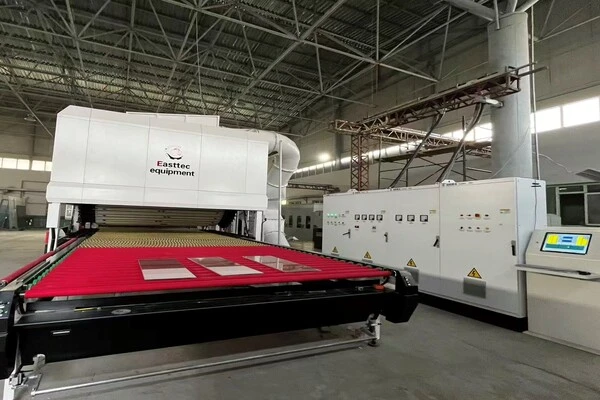
The thermal performance of the Radiation Hard Roller Glass Bending and Tempering Machine is just as important. The Matrix Radiant Heating system separates the furnace into different temperature zones. Each zone is handled separately to meet the specific softening needs of the glass panel being worked on. This zoned method stops areas from getting too hot and makes sure the viscosity is the same across the whole width of the sheet before the pressing phase starts. The end result is a curved line that can be made over and over again using geometry.
Here are the core performance advantages this technology delivers in production environments:
- Arc Deviation Within 1.5mm: Synchronized hard-roller pressing keeps curvature tolerances tighter than any soft-roller alternative. This means that complexly curved panels can be made in large quantities without having to be fixed by hand.
- Elimination of Optical Ghosting: Using precisely ground roller surfaces and controlled radiant heating gets rid of "ghosting," an image distortion artifact, meeting the optical clarity standards needed by car OEMs and high-end furniture makers.
- Dual-Function Processing: One machine can temper both flat and curved glass that is between 3 mm and 19 mm thick. This means that it can handle a wide range of products, from thin appliance panels to thick architectural safety glass.
- Rapid Recipe Changeover: The Industrial PC recipe management system keeps production parameters for each type of glass and radius. This lets machines adjust quickly between orders and cuts down on setup waste by a large amount.
These capabilities collectively address the root causes of arc deviation while expanding the range of glass products a single production line can handle economically.
Comparing Radiation Hard Roller Machines With Traditional Glass Bending Solutions
Performance Benchmarks That Matter to Procurement Professionals
When production volumes were low, and tolerances were loose, soft-roller and gravity-sag bending systems worked well. Neither of these conditions is true for competitive glass production right now. In every way that matters for making money, hard roller bending machines are better than traditional methods.
One place where the gap is most clear for the Radiation Hard Roller Glass Bending and Tempering Machine is temperature tolerance. Hard-axis parts made of alloy steel can handle constant working temperatures that speed up the wear and tear on regular roller materials. Maintenance times get a lot longer, and new parts for normal wear and tear cost a lot less. This durability directly means fewer unplanned stops for maintenance managers who are in charge of keeping equipment running.
Precision in bending is also a clear difference. Timed exposure in a heated setting is needed for traditional gravity-sag methods. This means that the results can be different every time the glass thickness or the temperature changes. When hard roller pressing is done, the right amount of mechanical force is applied at the right time during the softening cycle. This creates a consistent curve that matches the recipe specification that has been saved. The EASTTEC configuration has a standard flat tempering area that is 2440 x 3660 mm and a dedicated bending section that is 2440 x 1500 mm. This gives it a lot of capacity without sacrificing accuracy for either function.
Applications and Industry Use Cases of Radiation Hard Roller Glass Machines
Where Curvature Precision Creates Competitive Advantage?
Being able to keep the arc variation within 1.5 mm and reach a minimum bending radius of R ≥ 500 mm allows for proven uses in a number of high-demand areas.
When automotive glass manufacturers make windshield blanks, rear windows, and specialty vehicle glazing, they need to make sure that the curvature is consistent and matches the tolerances of the vehicle body during assembly. Any change that goes beyond what is specified can lead to bonding problems and water getting in. To meet engineering plans, architectural glass makers who work on curtain wall projects and curved building surfaces need accurate measurements. To pass OEM quality checks, appliance makers that make oven doors, refrigerator panels, and range hood glass need to make sure that the glass is clear and the same size every time.
The ability to do two things at once with the Radiation Hard Roller Glass Bending and Tempering Machine is helpful for furniture and internal glass makers. When you switch between flat cabinet glass and curved shower surround panels on the same machine, you don't need separate equipment lines. This saves money on capital costs and floor space. The IPC recipe system makes that switch possible in a real production setting, not just in theory.
Selecting and Procuring Radiation Hard Roller Glass Bending and Tempering Machines
Key Criteria for Confident Capital Equipment Decisions
When choosing a supplier for a curved glass tempering machine, you need to look at their technical skills, service infrastructure, and level of customization all at the same time. Depending on the design, lead times for glass tempering kilns are usually between 60 and 120 working days. This window needs to be taken into account when planning how to buy something.
Voltage and frequency compatibility across global industrial standards is important for buyers from other countries. EASTTEC can adapt to all types of power systems, such as 220V, 380V, and 415V at both 50Hz and 60Hz. This means that there is no risk of integration for factories in North America and Europe. Software language options, such as English, cut down on the time needed to train operators and speed up the process of reaching full production output.
As important as the tools itself is, the system that is in place after the sale. Online support is available 24 hours a day, seven days a week from EASTTEC technicians. The company's "turnkey" service model includes installation, commissioning, and operator training as standard parts of the purchase package. For factories that can't find enough skilled workers, being able to teach new operators to full proficiency in just one week is a real practical benefit. Before making a decision, buyers who are looking at Radiation Hard Roller Glass Bending and Tempering Machine suppliers should make sure that this amount of post-installation help is written into the contract.
Conclusion
Arc variation in mass-produced glass bending is a technical problem that can be fixed, not a normal part of doing business, and the Radiation Hard Roller Glass Bending and Tempering Machine proves this. When you combine Matrix Radiant Heating, IPC recipe management, and hard roller pressing technology, you get the consistent sizes, clear optics, and production freedom that modern glass makers need. The way EASTTEC is set up lets it work with glass from 3mm to 19mm in both flat and curved formats. It also keeps arc deviation to 1.5mm and lets you quickly switch between radii. The technical and financial case for hard roller technology is clear for any company looking at curved glass tempering equipment.
FAQ
What glass thicknesses does the hard roller bending machine process?
The Radiation Hard Roller Glass Bending and Tempering Machine can work with both flat and curved glass that is between 3 mm and 19 mm thick. It can make everything from thin appliance panels to thick architectural safety glass all at the same time.
How tight is the arc deviation tolerance?
With hard-roller pressing technology, the arc deviation stays within 1.5 mm. This is shown by synchronized mechanical transfer across the whole width of the bent section.
Can the machine switch between flat and curved tempering without extended downtime?
The IPC recipe system keeps track of the details for every product setup. Operators quickly recall stored recipes and make mechanical changes, which keeps changeover time manageable for production schedules that aren't all the same.
What is the minimum bending radius the equipment achieves?
The usual setup allows for a minimum bending radius of R ≥ 500mm, which is the right range of curves for use in automobile, furniture, and gadget glass.
What after-sales support does EASTTEC provide?
As standard, EASTTEC offers online technical support 24 hours a day, 7 days a week, as well as on-site installation and commissioning, operator training, and the ability to get spare parts anywhere in the world.
Connect With EASTTEC EQUIPMENT for a Direct Consultation
Since 1994, EASTTEC EQUIPMENT has been a leader in glass thermal processing technology, earning a name for itself around the world for accuracy, longevity, and quick expert support. If you are looking for a Radiation Hard Roller Glass Bending and Tempering Machine manufacturer for a new production line or to increase the amount of curved glass that can be processed, our engineering team is ready to give you a detailed technical proposal that fits your needs. You can email us at sales@easttecmachine.com to get more information, a price quote, or to set up a production showcase.
References
1. Glass Technology: European Journal of Glass Science and Technology Part A — Society of Glass Technology, 2021.
2. International Journal of Applied Glass Science — Wiley-Blackwell, 2022.
3. Glass Processing Days Conference Proceedings — Tamglass Ltd., 2019.
4. ASTM C1048 Standard Specification for Heat-Strengthened and Fully Tempered Flat Glass — ASTM International, 2018.
5. EN 12150-1: Glass in Building — Thermally Toughened Soda Lime Silicate Safety Glass — European Committee for Standardization, 2020.
6. Manufacturing Engineering Magazine: Precision Forming Technologies for Architectural and Automotive Glass — Society of Manufacturing Engineers, 2023.

USER EVALUATE
Here is the customer's evaluation of us