




Can a Radiation Hard Roller System Reduce Glass Distortion Problems?
Yes — a Radiation Hard Roller Glass Bending and Tempering Machine can measurably reduce glass distortion. By combining precision-ground hard rollers with synchronized mechanical transmission and multi-zone radiant heating, this technology eliminates the uneven thermal gradients and roller-induced surface deformation that cause warping, ghosting, and curvature deviation. Unlike conventional soft-roller setups, hard-axis drive systems maintain surface contact uniformity across the entire glass sheet during the bending cycle, keeping arc deviation within 1.5mm. For manufacturers processing architectural, furniture, automotive, or appliance glass, this translates directly into higher yield rates and fewer costly rejects.
Understanding Glass Distortion in Bending and Tempering Processes
One of the biggest problems with quality in heat processing is that glass often gets warped. The surface and core of a sheet of glass heat up at different rates when it goes into a tempering furnace. This difference in temperature inside the material causes stress concentrations that can show up as bowing, warping, or optical haze if they are not controlled. This is especially a problem in clear applications like shower walls, car windshields, and oven doors.
Roller Contact and Mechanical Deformation
Roller pressure is an important factor that is often forgotten when talking about distortion. The glass sheet has different amounts of friction across its width when rollers apply uneven lateral force because of surface wear, misalignment, or material degradation. This creates small curves that get bigger during the quenching phase, when the metal cools quickly and the shape is locked into the final product. The hardness, surface finish, and thermal stability of the roller material directly affect how much stress is transferred to the glass as it moves through the furnace.
Why Traditional Rollers Fall Short?
Normal rollers made of clay or silicon break down when they are heated and cooled over and over again. Contact consistency gets worse as their surfaces pit or get tiny flaws. This leads to the "roller wave" flaw over time, which is a small but financially unacceptable ripple that can be seen in reflective lighting. More and more, buyers of architectural glass, furniture makers, and auto OEMs are rejecting panels with this flaw, which is driving the need for more durable roller technologies.
How Hard Roller Systems Work to Reduce Glass Distortion?
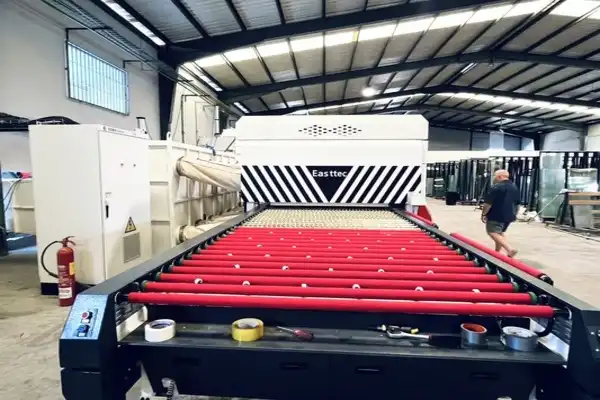
Hard-axis roller methods fix misalignment where it starts: in the machine. Because they are made of high-temperature-resistant alloy steel, these rollers keep their shape over thousands of hours of use without losing their surface, which happens with softer rollers. Their surfaces are precisely ground so that they make constant, low-friction touch with the glass during the whole bending process.
Synchronized Transmission and Thermal Zoning
Combining mechanical timing with smart thermal control is what makes an advanced Radiation Hard Roller Glass Bending and Tempering Machine stand out. Every roller in the drive chain moves at the exact same speed thanks to synchronized mechanical transmission. This gets rid of the difference in surface speed that causes shear stress on weakened glass. At the same time, a Matrix Radiant Heating system separates the heating room into separate temperature zones. Each zone changes its output based on the position and thickness of the glass. This keeps the hot spots and cold edges that cause thermal distortion from happening.
By using both mechanical precision and zoned thermal management, it is possible to keep the arc deviation to 1.5 mm, even on profiles with complex curves. It is now possible to have minimum bending radii as small as R ≥ 500mm without losing optical clarity.
Benefits of Implementing a Hard-Roller Glass Bending Machine
Switching to hard-roller bending technology has benefits that go far beyond controlling warping. Here are the main performance benefits this type of equipment provides:
- Versatile Production Range: One machine can temper both flat and curved glass from 3 mm to 19 mm thick, so it can be used for furniture tops, appliance panels, auto glass, and architectural glazing without the need for separate lines of equipment.
- Crystal-Clear Optical Output: Radiant heating and precision-ground rollers get rid of "ghosting," the weak double-image artifact that is common in soft-roller systems. This makes surfaces that meet the strict optical standards of the high-end furniture and car industries.
- Tight Geometric Tolerances: Hard-roller pressing keeps arc deviation to 1.5 mm, which means that curved panels can be used with assembly jigs and framing systems without having to be adjusted or reworked in the field.
- Durable, Low-Maintenance Construction: High-temperature alloy steel parts can handle repeated factory operations, which greatly increases the time between maintenance visits and lowers the cost of replacement parts over the equipment's useful life.
- Smart Production Management: Industrial PC (IPC) recipe systems keep process data for each glass standard in your order book. The time it takes to switch between different curves and glass dimensions is cut in half because operators can remember a recipe in seconds.
All of these benefits help with the main problems that production managers and technical directors have with procurement: lost yield, optical flaws, changeover delays, and unexpected downtime.
Market Comparison and Considerations for Procurement
There are a lot of different kinds of bending furnaces on the market for glass production tools, including the Radiation Hard Roller Glass Bending and Tempering Machine and its alternatives. These include gravity-sag systems, press-bending systems, and roller-driven platforms. Gravity-sag methods are cheap for large-radius architectural glass, but they aren't accurate enough for furniture or device uses that need tight-radius glass. Press-bending systems are very good at accurately bending curves, but they cost more for tools and take longer to switch between jobs.
Hard-roller bending furnaces are a good business middle ground because they offer geometric accuracy close to that of a press-bending system while still having the production flexibility and quick changeover speed of a roller-conveyor system. With a typical flat tempering area of 2440x3660mm and a dedicated bending section of 2440x1500mm, producers can serve a wide range of market groups from a single installation.
When purchasing equipment, buying teams should look at more than just the price quote. They should also consider the total cost of ownership, which includes how often the rollers need to be replaced, how long the heating elements last, how well they support software updates, and how easy it is to get local expert support. A good decision about capital equipment should take into account the credibility of the vendor, compliance with CE standards, and documented installation references.
Troubleshooting and Optimizing Hard-Roller Glass Tempering Machines
To keep working at its best, even well-designed equipment needs to be operated in a methodical way. Most problems with distortion in hard-roller furnaces can be traced back to three main causes: roller wear, zone temperature drift, and recipe parameter mismatch for glass thicknesses that aren't standard.
Proactive Maintenance Protocols
Maintenance teams can find micro-pitting before it gets bad enough to affect the quality of the glass by checking the roller surface on a regular basis, usually every 1,500 to 2,000 hours of operation. Thermal mapping audits, in which calibrated sensors check the accuracy of temperature readings in each zone, find heating element wear and tear early. These tasks are easy to do on systems that were built with an accessible furnace architecture in mind, and they are backed by suppliers who offer 24/7 online technical support.
Recipe Optimization for Diverse Orders
The IPC recipe system is only useful when process engineers take the time to set the right heating curves, roller speed profiles, and quench parameters for each type of glass being made. A well-kept, approved recipe library is more important than making changes by trial and error on the factory floor for rapid production flexibility, which means switching quickly between different shapes with little setup waste.
Conclusion
Distortion in tempered and bent glass is not a cost of making the glass; it is an engineering problem with an engineering solution, and the Radiation Hard Roller Glass Bending and Tempering Machine provides that solution. When ordered, set up, and taken care of correctly, hard-roller bending technology gives modern glass makers the mechanical accuracy and thermal regularity they need to compete on quality. Easttec's flat and bent tempering platform can handle glass from 3 mm to 19 mm thick, has a minimum radius of R ≥ 500 mm, and keeps arc deviation within 1.5 mm. It comes with 30 years of experience in thermal processing glass and full turnkey commissioning support.
FAQ
Does hard-roller pressing work for thin glass below 4mm?
Yes. The method can handle glass from 3 mm and up. For thin glass, the recipe needs to be carefully calibrated with lower roller pressure settings and a perfectly controlled heating ramp. The IPC recipe system makes this easy for production workers to do.
How does arc deviation within 1.5mm compare to industry standards?
Depending on the job, most architectural and furniture glass makers say that the arc error should be between 1.5 mm and 3 mm. Holding variation at 1.5 mm puts makers at the top of the market for quality, which lowers the chance of fitting problems during installation.
Can one machine produce both flat tempered glass and curved glass?
Yes, Easttec's design makes it easy to switch between flat and curved processing modes. This means that glass processing plants can serve a variety of industries with the same equipment footprint.
What maintenance does the hard-axis drive system require?
The main maintenance tasks include lubricating the synchronized transmission parts on a regular basis, checking the roller surfaces every 1,500 to 2,000 hours, and doing zone temperature calibration audits. When compared to other roller materials, the alloy steel design greatly increases the time between service intervals.
Is the equipment compliant with international quality standards?
Yes. The equipment meets CE standards and works with voltage and frequency configurations around the world, such as 220V, 380V, and 415V systems.
Request a Consultation from EASTTEC EQUIPMENT
Combining 30 years of manufacturing experience with Italian convection technology, EASTTEC EQUIPMENT has been making thermal processing solutions for glass since 1994. We are a reliable provider of Radiation Hard Roller Glass Bending and Tempering Machines, and we offer full customization, turnkey installation, and expert support 24 hours a day, 7 days a week. Get in touch with our team right away to talk about your production needs and find out how our tools can help you increase your yields and lower your costs. You can email us at sales@easttecmachine.com.
References
1. Glass Technology: European Journal of Glass Science and Technology, Society of Glass Technology, 2021.
2. Journal of Non-Crystalline Solids, Elsevier, 2020.
3. International Journal of Applied Glass Science, American Ceramic Society, 2022.
4. Glass Processing Days Conference Proceedings, Tampere University of Technology, 2019.
5. Ceramics International, Elsevier, 2021.
6. Thin Solid Films, Elsevier, 2023.

USER EVALUATE
Here is the customer's evaluation of us