




Full Convection Flexible Roller Glass Tempering Machine Delivers Stable Performance for Curved Glass Lines
When curved glass production lines struggle with inconsistent tempering stress, surface distortion, or high rejection rates on coated glass, the root cause is usually inadequate heating technology. The Full Convection Flexible Roller Glass Tempering Machine from EASTTEC EQUIPMENT directly addresses these problems. By combining a high-pressure forced-air convection system with high-tensile adjustable rollers, this machine delivers uniform thermal penetration across the full glass surface—including Low-E coated glass with emissivity as low as 0.01—while adapting to multiple bending radii without mold changes.
Understanding Full Convection Flexible Roller Glass Tempering Machines
What Separates Convection Heating from Radiation-Only Systems
Infrared elements are the main way that traditional radiation-based tempering furnaces move heat, which creates thermal gradients on coated or curved glass surfaces. A forced-air convection device moves high-temperature air around inside the glass at a controlled pressure, making sure that it reaches all areas of the surface equally. This method works especially well for Low-E glass because the metallic layer stops direct solar energy absorption and can oxidize when heated unevenly.
How Flexible Rollers Work for Curved Glass
The bendable roller bed is made up of high-tensile rods that can be adjusted to bend in a certain way. The servo motors are controlled by the IPC and PLC interface. In contrast to fixed mold systems, the operator can digitally recall stored bending recipes and change the radius between production runs without having to change the tools themselves. This cuts down on changeover time by a large amount and makes it possible to process glass from 4 mm to 19 mm thick for a wide range of building and car needs.
Key Technology Inside the Machine
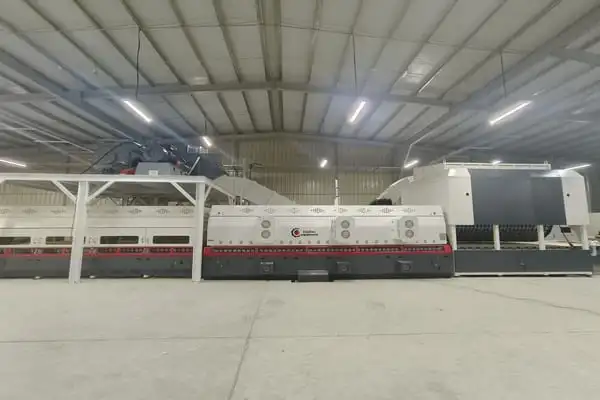
Easttec's design includes high-density composite insulation plates that help retain heat in the Full Convection Flexible Roller Glass Tempering Machine, supporting more efficient thermal management during production. The top-convection nozzle array of the Full Convection Flexible Roller Glass Tempering Machine sends heated air under pressure across the glass surface, helping overcome the thermal barrier created by coated surfaces. According to the stated equipment specifications, this design can make the heating cycle up to 30% faster than radiant-only models. Following the Italian convection engineering approach that EASTTEC has used since 1994, the Full Convection Flexible Roller Glass Tempering Machine uses convection components made from ceramic materials designed to withstand temperatures of up to 1,300°C. These heat-resistant components support stable operation under demanding thermal conditions. By combining high-density insulation, top convection, and flexible roller technology, the Full Convection Flexible Roller Glass Tempering Machine provides a controlled solution for efficient glass heating and tempering. For manufacturers processing coated and other demanding glass products, the Full Convection Flexible Roller Glass Tempering Machine can support consistent thermal performance and flexible production requirements.
Comparing Convection Flexible Roller Machines to Traditional Tempering Technologies
Thermal Uniformity: Convection vs. Chain Belt Systems
Chain belt tempering devices move glass on a metal mesh, which can cause touch marks and cool spots in certain areas. The roller-based convection system, on the other hand, uses synchronized rollers to hold the glass in place while hot air flows above and below the glass. Independent tests of convection furnaces show that the temperature is evenly spread across the glass surface to within ±1°C. This is a level of accuracy that regular chain systems can't consistently reach on curved profiles.
Mechanical Design and Maintenance Complexity
Fixed-mold bending systems need separate sets of tools for each bending radius. This means that a lot of money is stuck in molds, and there is a lot of downtime for changeovers. This limitation is taken away completely by the flexible roller design. Maintenance on EASTTEC's design is mostly done by calibrating the stepper motors and checking the bearings on a regular basis. The control system does live troubleshooting. New operators can learn basic operation and routine maintenance in just one week. This directly helps U.S. glass plants that are having trouble finding skilled workers right now.
Glass Quality Outcomes
When curved glass is made in standard gravity-bending kilns under pressure, it often has optical distortion along the bend line. When you mix the full convection method with timed roller movement, you get smooth changes in curvature that keep the optical sharpness. This makes glass that meets the standards for SGCC and EN 12150 bending stress, and the fragment density meets the requirements for CE safety certification for use in buildings.
Benefits and Performance Advantages for Curved Glass Lines
When manufacturers choose this technology, they get measured production benefits that affect both daily output and long-term costs of doing business. Here are the main ways this machine improves performance:
- Low-E Coating Protection: The forced-air convection system penetrates the thermal barrier of coated surfaces without oxidizing the metallic film. This is critical for architectural curtain wall glass, where Low-E coatings directly affect the building's energy performance rating.
- 30% Faster Heating Cycle: The high-pressure convection array cuts heating time by 30% compared to radiant-only tempering, which directly increases the number of furnace cycles possible within a single shift. For a mid-size architectural glass plant running two shifts, this can translate to a meaningful increase in monthly glass output.
- 20% Reduction in Heat Loss: High-density composite insulation retains furnace temperature more effectively, meaning the heating elements work less to maintain setpoint temperatures. This reduces electricity consumption and lowers the carbon footprint of each processed piece.
- 4mm to 19mm Thickness Range: The machine processes both decorative thin glass panels and heavy structural glass within the same equipment, making it practical for multi-product deep-processing plants serving multiple industry segments simultaneously.
All of these benefits can help lower the cost of processing each unit while maintaining the surface quality and stress levels required by customers in the automotive and building industries. The Full Convection Flexible Roller Glass Tempering Machine can support more consistent production while helping manufacturers manage scrap, throughput, and energy consumption. When factory owners evaluate the return on investment (ROI) of a Full Convection Flexible Roller Glass Tempering Machine, factors such as lower scrap rates, higher throughput, and reduced energy use can all be included in the financial assessment. A Full Convection Flexible Roller Glass Tempering Machine can therefore provide a practical equipment option for manufacturers seeking to improve production efficiency across multiple glass applications. For procurement teams working within a 3–12 month decision cycle, evaluating the operating requirements and expected production benefits of a Full Convection Flexible Roller Glass Tempering Machine can provide a clearer basis for equipment planning. By considering throughput, material waste, energy consumption, and product quality together, manufacturers can better assess whether a Full Convection Flexible Roller Glass Tempering Machine aligns with their long-term production objectives.
Procurement Considerations for B2B Clients
Evaluating Production Volume and Curvature Requirements
Before choosing a curved glass tempering furnace provider, buying teams should make a list of all the different types of glass, coatings, and bending radii that they currently use. EASTTEC can bend glass with minimum radii as low as 450 mm, depending on the thickness of the glass. The digital recipe system stores multiple curvature profiles so they can be quickly recalled. Buyers should make sure that any company selling a Full Convection Flexible Roller Glass Tempering Machine can show that it can do these things with the types of glass that their production line works with.
Pricing, Lead Time, and After-Sales Support
The curved tempering ovens made by EASTTEC are fully customizable pieces of equipment. Delivery takes between 60 and 120 working days, based on how the model is set up. The price depends on how much customization is done. This includes changing the power system to work with U.S. energy standards (220V/60Hz or 480V/60Hz), choosing a software language, and setting up output parameters. The company does the installation, commissioning, and training of the operators on-site. After handover, there is 24-hour online technical support available.
Customization and Compliance Requirements
CE certification is often a basic condition in project specs for U.S. architectural glass makers that want to bid on foreign projects. The machines that EASTTEC ships are fully CE certified. The color of the equipment, the parameters of the heating curve, and the layout of the cooling sections can all be changed to meet the needs of a specific production. This is a key factor for glass deep-processing service providers who work with a variety of industries.
Operation Guide and Troubleshooting
Recommended Settings for Different Glass Types
To achieve the appropriate convection pressure settings and heating zone temperatures for Low-E glass between 6 mm and 12 mm, manufacturers can use stored PLC recipes that take the coating's emissivity into account. The Full Convection Flexible Roller Glass Tempering Machine uses recipe-based process control to help operators apply consistent parameters for different Low-E glass specifications. EASTTEC's IPC interface allows production data to be managed efficiently and recipes to be stored for quick retrieval on the Full Convection Flexible Roller Glass Tempering Machine. This function can help reduce setup errors when switching between different production batches. By using stored recipes, the Full Convection Flexible Roller Glass Tempering Machine can support more repeatable heating and convection settings for coated glass. For manufacturers processing multiple Low-E glass specifications, the Full Convection Flexible Roller Glass Tempering Machine provides an integrated control platform for managing production parameters and simplifying batch changeovers.
Addressing Common Operational Challenges
Most of the time, uneven burning on covered glass is caused by not enough air pressure or blocked nozzle arrays that are blocked. At the start of each shift, operators should check the cleanliness of the nozzles. Roller synchronization drift normally leaves lines on the glass surface. This can be avoided by regularly calibrating the servos on a set cycle. In real time, the onboard diagnostic system shows when temperature zones and roller speed are not following the rules.
Preventive Maintenance Schedule
Every 500 hours of use, the heat-resistant bearings in the bent part need to be checked. Every three months, ceramic convection parts should be checked for cracks. The PLC keeps track of working data all the time, which helps the maintenance manager spot patterns of wear before they stop production.
Conclusion
To produce curved glass consistently, manufacturers need equipment that can handle different glass types, thicknesses, and bending shapes. EASTTEC's Full Convection Flexible Roller Glass Tempering Machine combines a forced-air convection system with an adjustable roller design to address common processing challenges associated with coated glass quality and production efficiency. The flexible roller system of the Full Convection Flexible Roller Glass Tempering Machine allows manufacturers to adjust the forming configuration for different curved glass requirements without relying on a separate fixed mold for every shape. With an integrated control system, the Full Convection Flexible Roller Glass Tempering Machine can also simplify daily operation and recipe management, while Easttec states that new operators can learn the system in about one week. According to the stated equipment specifications, the Full Convection Flexible Roller Glass Tempering Machine offers a heating cycle that is up to 30% faster and can reduce heat loss by 20%, along with CE certification. For architectural glass plants, automotive glass suppliers, and glass deep-processing businesses serving the U.S. market, the Full Convection Flexible Roller Glass Tempering Machine provides an integrated platform for flexible curved glass production. By combining convection heating, adjustable rollers, and automated control, the Full Convection Flexible Roller Glass Tempering Machine can support consistent processing across a range of glass applications.
FAQ
What types of curved glass are best suited for this machine?
This machine is mostly made for precisely bending Low-E architectural glass, curtain wall panels, car windshields, and gadget glass. It can work with glass that is 4 mm to 19 mm thick and apply the same amount of stress to the whole surface during the tempering process. This means that it can be used for both decorative interior applications and heavy-duty structural panels that need to meet safety certification standards.
How much energy does forced-air convection save compared to radiant-only systems?
The top-convection system and high-density composite insulation work together to cut heat loss by 20% compared to regular furnace covers. It heats 30% faster than radiant-only models, which means that for every kilowatt-hour of electricity used, more glass is processed during each shift. This savings adds up to a big drop in the monthly energy costs for a medium-sized business.
Can the machine be customized for U.S. electrical standards?
Yes, EASTTEC can change your power system to meet the voltage and frequency needs of U.S. industries. Before production starts, the size of the equipment, the heating curves, the cooling parameters, and the language of the software can all be set. The control interface can be used in English as a normal language, and bending recipes can be pre-programmed before delivery to meet specific curve needs.
What is the minimum bending radius achievable?
The machine can usually bend glass with a minimum radius of 450mm to 1,000mm, but this depends on how thick the glass is. Within this range, thinner glass can handle smaller radii, while thicker structural glass needs a bigger minimum radius to keep stress cracks from happening when it is bent.
Connect with EASTTEC EQUIPMENT for a Curved Glass Tempering Solution
Since 1994, EASTTEC EQUIPMENT has been making thermal processing equipment for glass. Our engineering team is ready to look at your production needs and help you choose the best curved tempering furnace design. If you need a Full Convection Flexible Roller Glass Tempering Machine for a new artistic glass line or want to replace old equipment, please email us at sales@easttecmachine.com for a technical conversation and a quote that is tailored to your needs. Certified by CE, using little energy, and being fully adaptable to the U.S. market.
References
1. Glass Processing Technology and Equipment Standards — Glass Technology: European Journal of Glass Science and Technology, 2022.
2. Thermal Uniformity in Industrial Glass Tempering Furnaces — Journal of Materials Processing Technology, 2021.
3. Energy Efficiency in Glass Manufacturing: Heat Retention and Convection Systems — Energy and Buildings, 2023.
4. EN 12150-1: Glass in Building — Thermally Toughened Soda Lime Silicate Safety Glass — European Committee for Standardization (CEN), 2015 (revised 2020).
5. Low-Emissivity Coatings on Architectural Glass: Processing Challenges and Solutions — Thin Solid Films, Elsevier, 2022.
6. Curved Glass in Modern Architecture: Manufacturing Methods and Quality Control — Construction and Building Materials, Elsevier, 2023.

USER EVALUATE
Here is the customer's evaluation of us