




Double Chamber Tempering Furnace for Mixed-Size Glass Production
A Double Chamber Tempering Furnace for Mixed-Size Glass Production uses a pre-heating chamber and a high-temperature chamber, so two glass batches move through heating at the same time. While one load finishes, the next one already warms up, which cuts idle time between loads. Plants that switch between sizes and thicknesses during a shift gain higher daily output and gentler, more even heating. Easttec's model tempers glass from 4mm to 19mm and reaches 1.8 to 2 times the capacity of a standard single-chamber furnace. I wrote this guide to help you decide whether that design fits your line.
How Does a Double Chamber Tempering Furnace Work?
Two Chambers, One Continuous Flow
There is only one room in a single-chamber furnace, so each load stays in the same spot from entering to leaving. This means that the sheets that come after them have to wait. A Double Chamber Tempering Furnace does two things at once: heat and cool. When the glass goes into the box that heats up first, it gets to a medium temperature. The tempering temperature is usually between 600°C and 700°C. It gets there after going through the high-heat chamber. Then it moves on to the quench part. The outside of the glass cools more quickly than the inside when it is quenched. This keeps the surface under stress, which is what makes glass strong. The first room is open for the next load as soon as the first load moves forward.
Forced Convection and Heating Control
Easttec Double Chamber Tempering Furnaces use real forced convection and are based on Italian convection technology. A hot air blower moves through the chamber, moving hot air around. The structures and parts that move air are made of ceramics that can withstand temperatures of up to 1300°C. This makes better use of energy and warms the glass faster. Radiation can make hot spots on smooth or thick glass, but moving air spreads heat evenly across the whole surface. That cuts down on stress points and warping caused by roller waves. It also makes it less likely that the metal will break when it cools. This makes sure that every batch is the same, which is important when you want to find out how much stress and breaking there is after cooking. Just make sure the heat is the same from shift to shift to get the same results.
IPC and PLC Synchronization
Two chambers can pay off at the right time. The Easttec Double Chamber Tempering Furnace is run by an Industrial PC that connects to a PLC. This PC manages both rooms and the cooling area. That tells you when to cool down, when to move each load, and for how long. Operators don't have to set the machine up by hand; instead, they choose a heating recipe that is already saved for the thickness of the glass. People who don't speak English or Spanish as their first language will find the menu in more than one language useful. Easttec says it only takes one week for new operators to learn how to run and fix things. This is helpful when it's hard to find skilled workers.
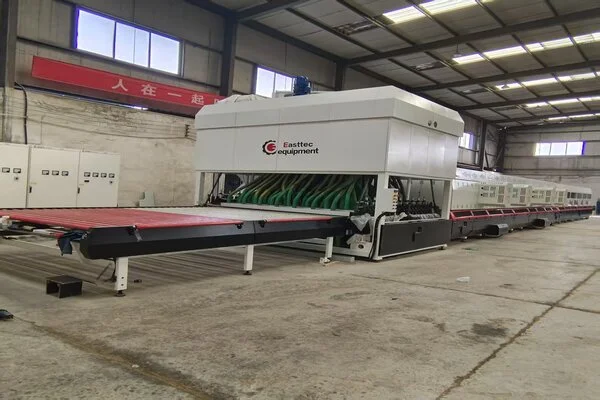
Benefits and Features of Double Chamber Tempering Furnaces in Mixed-Size Glass Production
Higher Daily Output
The output is usually the first thing plants look at. Easttec says that when the pre-heating and end heating are done at the same time, this type of Double Chamber Tempering Furnace can hold 1.8 to 2 times as much heat as a normal single-chamber furnace. The machine moves through a lot of 4mm to 6mm architectural lites very fast. However, it still heats up larger sheets up to 19mm. For a contract processor who works with customers who buy windows, doors, and railings, the benefit is shorter order backlogs and fewer overtime shifts. The real results rely on the thickness of the glass, how the load is laid out, and the operator's schedule. That's why I suggest you make a test plan with the products you have.
Quality Across Different Sizes
It's hard to get good quality with a Double Chamber Tempering Furnace when loads are mixed. It's important to keep in mind that big and small sheets absorb heat at different rates. If you don't, it can cause stress points or warping. It takes longer for two-stage heating to raise the temperature than it does for single-stage heating. This lowers thermal shock and makes the surface flatter. Soft-coated Low-E glass doesn't get as much smoke because this ramp is smoother. Still, the finished glass needs to meet the needs of your business. As per ASTM C1048 rules, fully curved glass in the US needs to have a surface tension of at least 69 MPa. The CPSC rule at 16 CFR 1201 must also be met. In Europe, EN 12150-1 is used in the same way. When the heat stays the same, it's easier to hit those goals batch after batch. The most important parts of a mixed-size line are shown below.
Core Features at a Glance
- Dual-stage heating architecture: The building has two heating stages, so two batches can work at the same time. This is possible with a pre-heating chamber and a high-heating chamber. The faster heating and the steady flow that make the 1.8 to 2 times capacity number possible are both improved by this. This is true even if the sizes of the loads change during the day.
- Thickness range: The Double Chamber Tempering Furnace can temper glass that is between 4 mm and 19 mm thick. This means that the same machine can cover both thin architectural lites and heavy-duty industrial panels. There is a different heating rate for each level in the program. There is also a quench area that is set to fit the batch that is being worked on. This way, workers don't have to guess between jobs.
- Energy and safety: Electricity costs 20% less per square meter of glass when high-density insulation is used. This saves money on both safety and electricity. Along with that, the Double Chamber Tempering Furnace is safe enough to meet CE safety standards for high output. Controlling the power makes sure that each room gets the same amount of electricity. This keeps the temperature the same.
Comparing Double Chamber vs. Single Chamber Tempering Furnaces for Procurement Decisions
Capacity and Cycle Time
If the furnace only has one chamber, it can only heat one load at a time. This means that the quench area often has to wait while the next load is heated. A Double Chamber Tempering Furnace plan fills in most of that space. Easttec says it can hold 1.8 to 2 times as much as a normal machine with one chamber. If your orders are all the same, one place might be able to handle them. That way, you can add more capacity without having to hire a second crew and furnace if you have a growing backlog and different shifts of different sizes. Before you make a choice, look at both options and see how many square meters you pay each month.
Cost, Energy, and ROI
To make sure that ROI is clear, it's important to know that a Double Chamber Tempering Furnace costs more up front than a single-chamber model. More work done per shift, energy used per square meter, and yield should all be thought about. Easttec's high-density insulation helps people save about one-third of their power because it is designed to use less energy. The business says that its insulation stops 20% of heat loss. You should get your own numbers because those numbers change based on the power rates in your area, the thickness of the glass, and the way the loads are spread out. It says that the U.S. Department of Energy: a lot of energy is used by the glass business. That is, every percentage point of power saved is important over the years of use.
Supplier and Service Checks
The grid only has one line for price. People who are in charge of buying things should also look at the supplier's history, qualifications, shipping time, and what they plan to do after the sale. Since 1994, Easttec has worked with Double Chamber Tempering Furnace technology for hardening glass. They use quality control systems that are based on Italian rules and are made to meet CE rules. It takes between 60 and 120 working days to deliver each furnace because they are made to order. Our techs are available online seven days a week, 24 hours a day. Installation, commissioning, and training for the operator are all parts of the service process. It takes three to twelve months to close this kind of deal, so we'd be happy for your engineers to come to the workshop and check out the gear.
Choosing the Right Double Chamber Tempering Furnace: Procurement and Customization Guide
Define Your Product Mix
Start with your orders instead of the brochure. How thick is the glass you sell? How thin is it? What is the biggest size of a sheet? How often do the sizes change during a shift? It is important to add the treated glass to the mix because Low-E and other similar coatings need careful heating curves. This will help you figure out how much you need each month and how much you will need in two or three years. Plants need different things. In order to soften 12mm to 19mm panels for industrial projects, one needs different tools than one that mostly cuts 4mm to 6mm architectural lites. You should tell the seller about this right away so that the engineering team has time to find the best room size, heating curve, and cooling settings for your projects.
Customization Options
First, make sure the Double Chamber Tempering Furnace can connect to the power source in your plant. The energy and frequency standards used in Easttec's power system are 220V, 380V, 415V, and 50/60Hz. These are the same around the world. While we're making your site, tell us what it needs. You can change the equipment's size, temperature curves, and cooling settings to make them work with your product. The operating menu comes in English, Spanish, Russian, Korean, Portuguese, and other languages. The gear can also be changed to a different color. Because every glass tempering oven is custom-made, this is the easiest step to add ODM and OEM requests.
Selection Checklist
- Technical fit: If the glass needs to be heated, check the range of thicknesses, the largest size of the glass, and how it will be heated. Make sure you have proof of the forced convection and ask the provider how they handle the heating for the safety glass. Before you sign, you should ask to see a live demonstration and think about how much flatness, stress, and fragmentation you are okay with.
- Operating cost: The price and the amount of energy used per square meter are both part of the overhead costs of running a business. Learn about the protection, how to deal with power, and the yearly replacement parts you will need. Also, ask for a list of things to wear. Ceramic wheels and bearings change how long the machine works, how much it costs to keep up, and how many hours your team has to work on it.
- Support: Look at how long it takes to fix problems, install, and set up the software. Also, there should be a clear training plan and online support 24 hours a day, 7 days a week in case the Double Chamber Tempering Furnace breaks down in the middle of the shift. Find out who will train your workers and how long they will be trained on-site.
Future Trends and Innovation in Double Chamber Tempering Furnace Technology
Energy Efficiency Pressure
The cost of electricity is always near the top when you compare Double Chamber Tempering Furnaces. One square meter of energy used can be cut down by better insulation, smarter ways to share power between rooms, and air systems that heat glass faster. In other words, Easttec's 20% cut in thermal energy loss means the same thing. It says that, according to the U.S. Department of Energy, a lot of energy is used by the glass business. By this measure, every 1% of saved power adds up over many years of business. There's more to a heater than just how much it costs. You should look at how much energy it uses over ten years. Get answers from each provider about how much energy they use per square meter at the width you usually pick. Then, put their answers next to each other and see how they compare.
Digital Monitoring and Control
Lines that heat glass are starting to use digital control. In workplaces, PCs and PLCs already keep track of how each step of the process is going, record batch data, and keep food warm. As part of Industry 4.0, many manufacturers now offer remote tracking. This lets engineers check on how machines are running even when they're not there. This information helps repair teams find changes in temperature or airflow before they become a problem. Find out what the Double Chamber Tempering Furnace control system keeps track of, what languages it works with, and how the seller solves problems before you ask for a quote. Online support from Easttec is open 24 hours a day, seven days a week. You can use this to help your team quickly solve problems.
Demand for Mixed-Size Flexibility
Plants that serve more than one market don't usually stay the same size all day. Different kinds of glass and coatings are needed for different types of panels, such as solar panels, panels for appliances and furniture, and walls. Double Chamber Tempering Furnaces that can quickly change recipes and keep the quench busy work better for these types of plants than lines that can only do one thing. With this method, there are two chambers. The first chamber heats up for the next load while the second chamber ends the current load. Don't forget that the quench still needs to meet one thickness at a time. One way to make the best mixed-size plans is to carefully plan the order of the loads and group sizes that are similar together.
Conclusion
For factories that work with different-sized glass and need to produce more without lowering the quality, a Double Chamber Tempering Furnace is beneficial. They say that the capacity is 1.8 to 2 times that of a single-chamber furnace because the pre-heating and high-heating chambers meet. Forced convection, IPC and PLC control, and slow two-stage heating can be used to soften glass from 4 mm to 19 mm in a smooth way. When insulation stops heat loss, the cost of energy per square meter drops by 20%. CE compliance also ensures safety. When compared to a single chamber, the more expensive machine pays for itself in output, energy, and return. However, buyers should make sure they know about the different types of products, how much electricity they will need, support, and standards such as ASTM C1048. Still, the loads need to be carefully put in order because the quench needs to match the thickness of each batch.
FAQ
What thickness range can the furnace handle?
Easttec's Double Chamber Tempering Furnace can heat glass that is 4 mm to 19 mm thick. It goes over big industrial panels and quickly runs a lot of 4mm to 6mm building lights.
Can it temper different thicknesses at the same time?
The quench has to meet one layer at a time, even though each cylinder works on its own. Most of the time, plants put layers of the same thickness in a certain order. The space that was preheated gets ready for the next load while the current one cools down. In other words, there isn't much time between loads.
How much energy does the design save?
When you use high-density insulation, you lose 20% less heat. It also says that its Double Chamber Tempering Furnace design can help people cut their electricity use by about one-third. You should do your own math because the findings rely on the type of glass, the load pattern, and the power rates in your area.
How fast can new operators learn the system?
Easttec says that it only takes one week for new employees to learn how to run and manage the tools. The software also lets you choose from languages other than English.
Get Your Double Chamber Tempering Furnace Quote from EASTTEC EQUIPMENT
Looking for a Double Chamber Tempering Furnace manufacturer that understands mixed-size production? EASTTEC EQUIPMENT offers CE-compliant furnaces, true forced convection, custom voltage options, and 24-hour online support. Send your glass sizes, thicknesses, and daily output target to sales@easttecmachine.com, and our team will prepare a suitable configuration. Visit easttecglass.com for product details.
References
1. ASTM International, Standard Specification for Heat-Strengthened and Fully Tempered Flat Glass (ASTM C1048), 2018
2. European Committee for Standardization, EN 12150-1 Glass in Building: Thermally Toughened Soda Lime Silicate Safety Glass, 2015
3. U.S. Consumer Product Safety Commission, Safety Standard for Architectural Glazing Materials (16 CFR Part 1201), 1977
4. U.S. Department of Energy, Energy and Environmental Profile of the U.S. Glass Industry, 2002
5. Arun K. Varshneya, Fundamentals of Inorganic Glasses, 2006
6. European Parliament and Council, Directive 2006/42/EC on Machinery, 2006

USER EVALUATE
Here is the customer's evaluation of us