




Convection Flexible Roller Flat & Bend Glass Tempering System Enhances Uniform Heating for Glass Processing
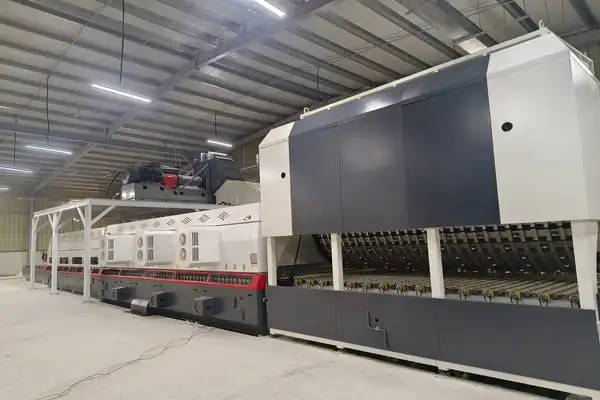
A Convection Flexible Roller Flat & Bend Glass Tempering System is a thermal processing machine that combines forced hot-air circulation with an adjustable roller mechanism to temper both flat and curved glass in a single production line. By circulating high-velocity air across the glass surface, the system achieves temperature uniformity that radiation-only furnaces simply cannot match. This matters because uneven heating causes internal stress imbalances, leading to breakage or optical distortion. Easttec's convection-based design addresses this directly, making it the preferred choice for architectural, automotive, and appliance glass producers who demand consistent quality at volume.
Understanding Convection Flexible Roller Glass Tempering Systems
It's helpful to know how tempering machines work and why the mix of convection and flexible rollers is worth thinking about before you buy any.
How Flexible Roller Tempering Works
In classic rolling hearth furnaces, glass is moved across clay rollers that stay in place, while radiant heating elements heat the glass from above and below. More than that, a bendable roller system lets those rollers automatically change shape into an arc shape, which shapes the glass as it heats. The rollers have heat-resistant sleeves, usually made of Kevlar or ceramic coating, that keep the glass in precise contact with the rollers during the bending cycle and keep the surface from getting scratched.
Flat vs. Bend Glass Processing Differences
To temper flat glass, the roller height must stay the same and the heat must be spread evenly across the whole panel's width. When you bend glass, you add a bending axis, which means the rollers have to move from a flat plane to a measured radius without putting too much stress on the sides of the curve. The hardest part is making sure that the roller arc change and the heating profile work together so that the glass gets the right temperature for shaping at the exact moment that the curve is applied.
Machine Types: Dedicated, Bend, and Hybrid Systems
There are dedicated flat furnaces, dedicated bend furnaces, and mixed customizable systems that manufacturers can pick from. Easttec's convection line has hybrid machines that can switch between flat and bend modes through an HMI interface in less than five minutes. This means that companies that make a variety of products don't have to buy different production lines, which saves money on capital costs.
Benefits of Using Convection Flexible Roller Systems for Glass Processing
This technology has benefits that go beyond just making things look better on the surface. What production managers and technical heads always say are the best things about this kind of system:
- 30% Faster Heating Cycles: Easttec's high-pressure Convection Flexible Roller Flat & Bend Glass Tempering System shortens the production cycle by approximately 30% compared to radiant-only furnaces. This directly increases daily output capacity, which is a measurable ROI factor for factories running multiple shifts on thick or Low-E coated glass.
- Superior Heating Uniformity for Coated Glass: The top forced convection system circulates air at high velocity, penetrating Low-E coatings with emissivity as low as 0.01. This prevents film oxidation and ensures every section of the glass panel reaches the correct tempering temperature without localized overheating.
- 20% Reduction in Thermal Energy Loss: Easttec integrates proprietary high-density insulation with inverter-controlled fans. This combination cuts thermal energy loss by 20%, which translates to lower monthly electricity costs—a priority for any plant running high-volume production.
- 4mm to 19mm Processing Range: The system reliably tempers glass from thin decorative panels at 4mm up to heavy structural glazing at 19mm, covering the full spectrum of architectural, automotive, and appliance glass specifications.
A lot of glass makers tell me that two problems they have are uneven quality in coated glass and high energy costs. These benefits directly address those problems. They make a good case for using convection instead of traditional radiation systems when looked at both together.
Comparing Convection Flexible Roller Tempering with Traditional Tempering Systems
One of the most important steps in the buying choice process is to know the difference between convection heating and radiation heating.
Heating Uniformity: Convection vs. Radiation
Infrared elements placed above and below the roller bed heat the glass in radiation ovens. This works well for clear, thin glass but not so well for Low-E coatings that reflect heat. With convection heating, hot air is pushed straight across the surface of the glass. This gets around the problem of reflectivity and makes the temperature more uniform within smaller limits. Testing done by the industry shows that convection systems cause coated glass to fail at the edges less often.
Processing Speed and Operating Cost Comparison
Cycle times are faster because convection heating can get through thick or coated glass more quickly. A convection system can finish the same cycle about 30% faster than a radiation furnace, which may need more dwell time to reach full tempering temperature when working with 12mm Low-E glass. Over the course of a full production year, that saved time adds up to a lot more work that can be done without adding shift workers.
Flexible Roller Models vs. Fixed Roller Hearth Machines
Fixed roller hearth machines are good for making a lot of flat glass, but they can't work with curved glass without switching the whole line over. The same machine can handle both shapes with a flexible roller design. This two-in-one feature lowers the cost of equipment while keeping flexibility in throughput for glass producers that work with both architectural facade customers and car suppliers.
Maintenance, Troubleshooting, and Operational Optimization
Before buying any big pieces of equipment, you need to get a clear picture of how much upkeep it will take. This is what Easttec's method is made to do.
Routine Inspection and Preventive Maintenance
The quality of the surface stays the same by checking the roller sleeves once a week for wear or glazing buildup. Because they work all the time at high temperatures, the convection fan bearings should be checked once a month. Easttec offers a complete range of extra parts and upkeep instructions in a number of languages, such as English and Spanish.
Common Issues and Solutions in Bend Glass Tempering
The most common problem in making bent glass is that the heating doesn't happen evenly. Usually, the problem is caused by either the fan speed being set wrong or the convection tip array being partially blocked. Easttec's Convection Flexible Roller Flat & Bend Glass Tempering System's IPC and PLC control interface logs real-time data on fan pressure, so workers can spot changes before they hurt the quality of the product. Most new users can learn how to use the diagnostic screen in just one week of training.
Process Optimization Through Software and Parameter Control
Easttec's Industrial PC interface saves bending recipes so they can be quickly retrieved. This makes setting up for different products much faster. The PLC controls the arc variation to very close limits, and the inverter-controlled fan system changes air speed automatically based on the thickness of the glass. This means that tuning doesn't have to be done by hand between production runs.
Procurement Guide for Buying Convection Flexible Roller Flat & Bend Glass Tempering Systems
For medium- to large-sized glass makers, the process of choosing the right tempering method usually takes three to twelve months and includes several steps.
Key Technical Factors to Evaluate
Before calling suppliers, procurement managers should write down the production needs, such as the largest glass dimensions, the target thickness range, the bend radius specifications, and the daily output volume that needs to be met. Easttec's systems can handle glass thicknesses ranging from 4 mm to 19 mm in both flat and curved forms. The flexible roller mechanism can handle large architectural curves that rigid systems can't.
Supplier Credibility and After-Sales Support
The service system of the provider has a lot to do with how reliable the equipment is. Easttec offers live technical help 24 hours a day, 7 days a week, as well as installation and commissioning services and training programs for operators. CE certification shows that a product meets international safety standards, which is important for processors that want to bid on projects in Europe and North America. The wait time for delivery is between 60 and 120 working days, based on how it is set up.
Cost, Customization, and ROI Considerations
Easttec offers flexible power options for international industrial standards, such as 220V, 380V, and 415V at 50/60Hz, and its software tools can be used in a number of languages. When you add up the energy savings from better insulation and convection and the 30% increase in productivity, you get a payback timeline that factory owners and general managers can show to people who make financial decisions.
Conclusion
It is easy to see why the Convection Flexible Roller Flat & Bend Glass Tempering System is a good idea. The main worries of glass makers in the architectural, car, appliance, and solar glass sectors are even heat spread, shorter cycle times, lower energy use, and the ability to flatten and bend glass on a single line. This is what Easttec's system has to offer: CE approval, IPC/PLC precision control, and a working window that ranges from 4mm to 19mm. This technology is a useful and well-supported way for factories to increase their output without having to double the size of their equipment.
FAQ
1. What glass types can a convection flexible roller system process?
The system can work with flat architectural glass, curved auto glass, Low-E coated glass, and appliance glass that is 4mm to 19mm thick. The convection heating method works especially well with Low-E glass that has an emissivity as low as 0.01, where radiation-only systems don't always give reliable results.
2. How long does it take to switch from flat mode to bend mode?
The mode switch can be done through the HMI interface in less than five minutes with Easttec's servo-controlled movable roller system. Mold changes don't have to be done by hand, so the production line isn't down for long periods of time.
3. How does convection heating prevent coating damage on Low-E glass?
Infrared absorption is not needed because high-speed airflow spreads heat evenly across the glass surface. This method stops the warming in certain areas that breaks down Low-E film layers in radiation-based heaters.
4. What after-sales support does Easttec provide?
Easttec provides online expert help 24 hours a day, 7 days a week. They also provide on-site installation and commissioning, operator training, and spare parts. Technical documentation is provided in a number of languages to help with activities around the world.
5. Is the equipment certified for international markets?
Yes. Easttec's convection flexible roller tempering system is fully CE approved, which means it meets all the safety and performance standards needed for industrial and building glass projects in Europe, North America, and other places.
Request a Custom Quote from EASTTEC EQUIPMENT
Since 1994, EASTTEC EQUIPMENT has been making machines for thermally handling glass. We use this wealth of experience in every Convection Flexible Roller Flat & Bend Glass Tempering System we make. As a reliable provider of convection flexible roller tempering systems to factories on several continents, we offer CE-certified equipment, full customization, and technical support 24 hours a day, 7 days a week. Get in touch with our team at sales@easttecmachine.com to talk about your production needs and get a full technical proposal.
References
1. Glass Technology: European Journal of Glass Science and Technology, Society of Glass Technology, 2022.
2. ASTM C1048: Standard Specification for Heat-Strengthened and Fully Tempered Flat Glass, ASTM International, 2023.
3. EN 12150-1: Glass in Building — Thermally Toughened Soda Lime Silicate Safety Glass, European Committee for Standardization, 2019.
4. Flat Glass Technology, K. Löffler, Springer-Verlag, 2017.
5. Energy Performance of Industrial Furnaces and Kilns, International Energy Agency, 2021.
6. Glass Processing Days Conference Proceedings: Advances in Tempering Technology, Glaston Corporation, 2019.

USER EVALUATE
Here is the customer's evaluation of us