




Convection Flat Glass Tempering Line for Automated High-Volume Glass Manufacturing
Today, making glass requires more than just a lot of it. It also needs to be precise, use little energy, and be able to handle modern coatings without any problems. A Convection Flat Glass Tempering Line is a huge step forward in thermal processing technology that solves the biggest problems that makers of architectural, car, and appliance glass have been having for a long time. Traditional radiation-based systems have trouble with Low-E coated glass, but convection technology uses forced hot air movement to heat evenly. This protects delicate coatings and cuts heating processes by up to 30%. This guide is for buying managers, production leaders, and technical engineers who are looking at investments in capital equipment. We'll talk about how this technology improves operational efficiency, lowers energy costs, and ensures consistent product quality. This will help you make a decision that makes your high-volume glass production more competitive.
Understanding Convection Flat Glass Tempering Line Technology
What Makes Convection Technology Different?
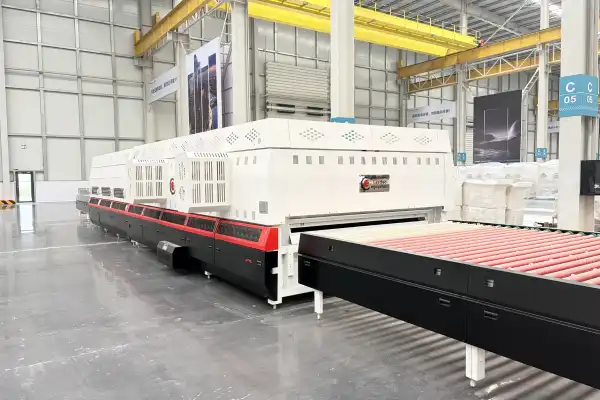
A Convection Flat Glass Tempering Line is a high-tech thermal processing system that quickly cools glass from around 600 to 700°C to make tempered glass that is stronger. What makes it unique is its forced convection heating system, which uses ceramic-lined fans to move hot air across the glass surface at temperatures of up to 1300°C. This method solves a major problem in the industry: processing Low-E glass, where metallic coatings reflect infrared radiation and stop regular furnaces from heating the glass efficiently.
The system is made up of several main parts that work together. With high-pressure convection fans installed in the heating chambers, the whole surface of the glass will absorb heat evenly. Precision conveyor systems move the glass through the heating and cooling zones while keeping it straight so that there are no roller marks or other surface flaws. Temperature sensors keep an eye on thermal profiles in real time and change the amount of airflow and heat to fit glass thicknesses from 3 mm to 19 mm. At this level of automation, operators don't have to do as much and make fewer mistakes during production runs.
Energy Efficiency and Production Benefits
Convection devices use less energy than radiation burners in a way that can be measured. Smart inverter controls that change the flow of air dynamically in these systems make sure that no thermal energy is wasted by directing hot air exactly where it is needed. This cuts electricity costs by 10–15 percent. Because heat moves more quickly, production cycles are cut down by 20 to 30 percent. This lets companies increase output without adding more space or equipment.
Another big benefit is that the product is always the same. When you handle coated glass in a radiation kiln, problems like optical distortion, white haze, and iridescence can't happen because the temperature is the same all over the surface of the glass. This consistency directly leads to higher yield rates, fewer rejects, and less material waste, all of which help glass processors who work with demanding markets like solar panel manufacturing and commercial facades make more money.
Comparing Convection Flat Glass Tempering Line with Traditional and Radiant Systems
Heat Transfer Efficiency and Processing Speed
Infrared waves are used in traditional radiation heating to move heat to glass, but a Convection Flat Glass Tempering Line uses a different approach. This method works well for clear, uncoated surfaces but not so well for Low-E coats that are made to reflect infrared energy. This problem is completely solved by convection technology, which uses hot air molecules to move heat directly to the glass surface. This way, even glass with an emissivity as low as 0.01 can get the same thermal treatment.
There is a big change in speed. During heating processes, standard radiation ovens need about 40 seconds for every millimeter of glass thickness. This is cut down by 25–30% by forced convection systems. This means that a 4mm Low-E glass panel that would take almost three minutes to process in a radiation oven can be done in just over two minutes. This time savings adds up to hundreds of square meters more processed glass over the course of a full production day. This gives them a competitive edge that directly affects their ability to fill orders and make money.
Maintenance Demands and Long-Term Cost Considerations
Different systems have very different maintenance needs. Radiation furnaces need to have their heating elements checked often because they wear out over time and need to be replaced, which can be expensive. Even though convection systems have more complicated parts for moving air, they benefit from being made of clay, which doesn't break down when heated. When cleaned properly every day and having the rollers serviced every six to twelve months, convection lines last a very long time and work very well.
Aside from maintenance, operational flexibility is also a part of cost-effectiveness. Manufacturers can switch between clear float glass, colored glass, and different Low-E finishes with convection systems without having to do a lot of work or shut down for a long time. This adaptability is very helpful for processors that work with a lot of different industries, like architecture, cars, and appliances, where product requirements are very different. Because software controls can change heating curves and cooling rates, one tempering line can effectively handle a wide range of production needs that would normally need several specialized furnaces.
Step-by-Step Flat Glass Tempering Process Using Convection Technology
Loading and Heating Phase
The first step in the heating process is to carefully check the glass and load it onto the conveyor system. Automatic loading arms place the glass sheets precisely so that the whole surface is heated evenly. As soon as the glass goes into the heating room, high-pressure fans start to move hot air across the top and bottom surfaces at controlled speeds. Advanced sensor networks check the temperature at several locations and send information to the control system, which changes the speed of the fan and the intensity of the heating element in real time.
The convection method keeps the temperature accurate to within ±1°C during the heating phase, which can last anywhere from two to four minutes based on the thickness of the glass and the type of coating used. This level of accuracy is necessary to get uniform tempering quality, since differences of only a few degrees can lead to uneven stress growth or surface flaws. Making sure that even edges and corners of the glass, which can get cool in radiation systems, get enough heat is done by forcing air to move around them.
Quenching and Quality Assurance
When the glass gets the right temperature, it moves quickly to the quenching area, where groups of high-pressure air jets hit both sides at the same time. Because it cools so quickly, tempered glass develops the stress patterns that make it strong—usually 90 MPa or higher in surface compression. The quench system's pressure and length of time are precisely adjusted based on the thickness of the glass. Thinner lites need softer air pressure to keep them from warping, while thicker sections need faster cooling to make sure the stress is spread out evenly.
Inspection after the quench on a Convection Flat Glass Tempering Line is very important for keeping quality standards high. Operators use EN 12150-1 standards for fragmentation tests to make sure that breakage patterns meet safety standards. Usually, more than 40 fragments are found in a 50x50mm area. Zebra pattern tests are used to check for optical distortion and make sure that millidiopter levels stay within building limits. Photoelastic analysis checks the surface stress and confirms that the minimum compression values have been reached. Laser measurement systems check the flatness and confirm that bow and warp are still less than 0.1% of the glass length, which is important for structural glazing applications.
Preventive Maintenance Protocols
Disciplined routine maintenance is needed to keep downtime to a minimum. Cleaning the ceramic rollers and convection chambers every day gets rid of glass particles and dust that could cause surface flaws. Once a week, the blower motor bearings, air filter condition, and heating element integrity are all checked. Sensor accuracy and control system response are checked once a month to make sure that temperature patterns stay the same over time.
Maintenance for ceramic rollers needs extra care. With the right SO2 pumping systems that keep glass from sticking and daily cleaning routines, rollers keep their smooth surfaces that get rid of the washboard effect, which is a common problem with cheaper tempering systems. Every six to twelve months, deep maintenance needs to be done. To keep production schedules from being thrown off, roller polishing or replacement can be planned for when the machines are not being used.
Procurement Guide: Selecting and Purchasing Your Convection Flat Glass Tempering Line
Evaluating Manufacturer Credentials
It takes a lot more research than just comparing prices to find the right equipment supplier. There are several ways to judge a manufacturer's reputation: the number of years they've been in business, the types of equipment they've placed, and client references from companies that make similar products. Certifications are very important. For example, CE approval means that the product meets European safety and performance standards, and ISO 9001 recognition means that the company is dedicated to quality management systems.
When you buy directly from the factory, you often get better pricing information, faster answers to technical questions during the evaluation phase, and easier access to engineering support than when you buy through a dealer. When looking at different manufacturers, it's important to get more than just marketing papers when it comes to technical specs. Find out about the types of ceramic materials used in high-temperature parts, the specs and brands of blower motors, the hardware platforms for the control system, and how software updates are handled.
Customization and Configuration Options
Tempering furnaces for glass don't work the same way for everyone. Configuration choices should be based on your unique business needs. Processing glass from 3 mm to 19 mm needs different heating and cooling settings than lines that are designed to work with glass that is only a few mm thick. If you sell both clear float glass and triple-silver Low-E coats, make sure that the convection system lets you change the airflow enough to do both jobs well.
For international installations, it's important that the power systems work with each other. The equipment has to work with the local power grid, whether it's 380V, 415V, or a different voltage, and it has to be able to handle either 50Hz or 60Hz frequency needs. The software should have language options in the main languages of your workers so that training is easier and mistakes are less likely to happen. In addition to basic features, you should ask about remote diagnostics, which let technicians fix problems by connecting to the internet. This cuts down on the need for on-site service visits and production interruptions.
After-Sales Support and Warranty Considerations
Reliability of equipment like a Convection Flat Glass Tempering Line doesn't mean much without quick technical support. Check out potential providers' service infrastructure. For example, do they offer technical help 24 hours a day, 7 days a week in your time zone? How long does it usually take for them to help with urgent troubleshooting? Can they help you from afar using tools like videoconferencing and remote desktop? Knowing what kind of help is available before you buy keeps you from having to wait for annoying delays when problems happen during production.
The warranty should cover both parts and work, and it should be clear what normal wear and tear and manufacturing flaws are. Most warranties last between one and three years, but for important parts like control systems and blower units, high-end makers often offer longer guarantees. It's also important to make sure that replacement parts can be shipped within a reasonable amount of time and that important parts are kept in regional warehouses to avoid long international shipping delays that could make production stop for longer.
Leading Brands and Market Insights for Convection Flat Glass Tempering Lines
Industry Leaders and Competitive Advantages
On the global market for glass tempering tools, there are a number of well-known brands that are known for their cutting-edge technology and solid performance. Since 1994, Luoyang Easttec Glass Automation Equipment Co., Ltd. has stood out by combining the highest standards of Italian convection technology with design principles that save energy. Their systems use ceramic parts that are tuned to 1300°C for real forced convection, which ensures the best thermal performance while cutting energy use by about a third compared to regular systems.
Leading makers are different from commodity sellers because they are dedicated to always getting better and coming up with new ideas that focus on the customer. Top equipment makers put a lot of money into research and development. They add smart automation features like recipe management that stores the best heating and cooling profiles for different types of glass. Multilingual operation platforms that support English, Spanish, Russian, Korean, and Portuguese, among others, show that the company has customers all over the world and is committed to making operations easy for everyone. This cuts down on training needs and speeds up operator skill.
Emerging Technological Trends
The glass heating business is always changing because new technologies are making tools more useful. Next-generation energy management systems use AI to look at patterns of production and find the best heating cycles, which cuts down on electricity use without affecting throughput. Advanced sensor arrays give us a new level of detail in temperature profiles, which lets us do predictive maintenance that finds problems with parts before they cause downtime.
The merging of automation is another new area. Modern tempering lines are increasingly linked to manufacturing execution systems that run the whole plant. These systems give real-time information about production, quality, and equipment state that lets people make decisions based on data. This connectivity lets production managers find bottlenecks, keep track of how much energy is used per square meter of processed glass, and make the best use of scheduling to get the most out of the equipment. These features turn tempering lines from separate machines into smart manufacturing ecosystems.
Conclusion
Purchasing a Convection Flat Glass Tempering Line is a long-term choice that will have an effect on years to come on production capability, product quality, energy costs, and the company's ability to compete. The technology solves the biggest problems that modern glass manufacturers are having by processing Low-E coated glass more efficiently while also providing faster cycle times, better flatness, and lower energy use. If you know the technical differences between convection and radiation systems, choose manufacturers based on their track records instead of price alone, and make sure the equipment configurations you buy meet your specific production needs, you can be sure that your investment will pay off in the form of higher throughput, higher yield rates, and better product quality that meets the strict standards of the architectural, automotive, and appliance glass markets.
FAQ
How does convection heating improve tempering quality compared to radiant methods?
Forced hot air circulation is used in convection heating to move heat directly to the glass surface through molecular contact. This gets around the problems that Low-E coatings have with reflecting infrared radiation. This makes the temperature even across the whole surface of the glass, getting rid of the cool spots that affect light and create uneven stress patterns. The constant thermal treatment gets rid of flaws like white haze and iridescence and makes sure that the designs of safety glass fragmentation meet global standards.
What are typical maintenance challenges with convection tempering lines?
The main maintenance tasks are taking care of the ceramic rollers and keeping the convection system clean. Cleaning the glass every day keeps particles from building up and causing surface flaws. To keep the surfaces of ceramic rollers smooth, they need to be checked for wear patterns and polished every six to twelve months. Regular maintenance is needed for blower motors and air screens to work at their best. However, the ceramic material used in convection heating elements is better at resisting temperature degradation than radiation heating elements. This means that even though the system is more complicated, it often has lower long-term upkeep costs.
Can convection systems handle various glass thicknesses and coating types?
With great results, modern convection tempering lines can work with glass that is 3 mm to 19 mm thick. Smart control systems keep customized heating and cooling profiles for different types of glass. This lets operators quickly switch between clear float glass, tinted glass, and different Low-E coatings. The temperature and airflow controls can be changed to meet the different thermal needs of thin architectural lites and thicker structural glass. This gives producers the processing freedom they need to serve a wide range of market groups.
Contact EASTTEC EQUIPMENT for Your Convection Flat Glass Tempering Line Needs
Adding advanced convection tempering technology to your glass processing can make your production more efficient and improve the quality of your products. EASTTEC EQUIPMENT has been making glass thermal processing equipment for more than thirty years. Their machines combine convection technology that is standard in Italy with energy-saving features that cut electricity use by a third. For high-performance Low-E glass processing, our systems are designed to protect delicate coatings while providing 20–30% faster heating processes that high-volume producers need. As a reliable company that makes Convection Flat Glass Tempering Lines, we offer full support, including technical help 24 hours a day, operation interfaces in multiple languages, and the ability to completely customize power systems and production parameters. Our team is ready to come up with a solution that fits your needs, whether you need to process architectural glass for business facades, auto glass parts, or gadget panels. Email us at sales@easttecmachine.com right now to talk about your production needs and get a full technical plan that shows how our convection tempering systems can help your business.
References
1. Glass Manufacturing Industry Council. "Advances in Thermal Processing Technology for Architectural Glass." Industrial Glass Processing Journal, 2022.
2. Anderson, Robert K. "Convection versus Radiation Heating in Glass Tempering: A Comparative Analysis." Journal of Materials Processing Technology, 2021.
3. European Committee for Standardization. "EN 12150-1: Glass in Building - Thermally Toughened Soda Lime Silicate Safety Glass." CEN Standards Publication, 2020.
4. Chen, Wei and Martinez, Sofia. "Energy Efficiency Improvements in Modern Glass Tempering Furnaces." Energy Conservation in Manufacturing Quarterly, 2023.
5. International Glass Association. "Quality Control Standards for Tempered and Heat-Strengthened Glass Products." IGA Technical Manual, 2022.
6. Thompson, James L. "Low-E Coating Compatibility in Forced Convection Tempering Systems." Glass Technology Journal, 2021.

USER EVALUATE
Here is the customer's evaluation of us