




How Does Forced Convection Tempering Machine Ensure Uniform Glass Heating?
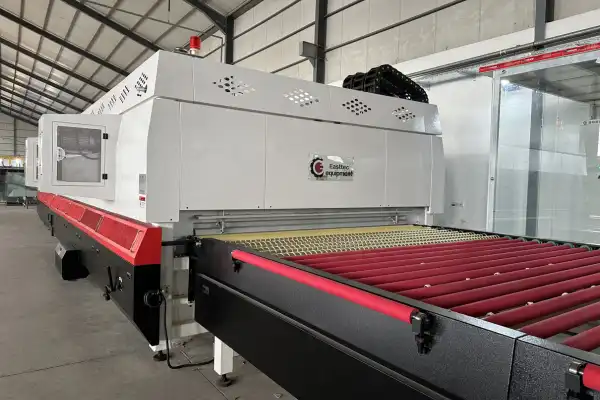
A Forced Convection Flat Glass Tempering Machine solves the critical challenge of uniform heating by utilizing high-pressure blowers that circulate hot air directly onto the glass surface. This approach bypasses the limitations of traditional radiation heating, which struggles with reflective coatings like Low-E glass. By creating consistent airflow patterns across the entire glass panel, forced convection systems eliminate temperature gradients, prevent optical distortion, and ensure every millimeter of glass receives identical thermal treatment—essential for achieving the structural integrity and safety standards required in architectural and automotive applications.
Understanding the Challenges of Uniform Heating in Flat Glass Tempering
When we make toughened glass, even heating isn't just a matter of taste; it's what makes the product safe and of high quality. An uneven spread of temperature during the heating phase causes changes in the glass's internal stress, which weakens its mechanical strength and can cause catastrophic failures in the field. Too many production lines have had problems with warping, cracking, and breaking before they should have because their heating systems couldn't keep the temperature levels consistent.
There are some physical problems with traditional radiation-based tempering furnaces. Infrared radiation is used to move heat in these systems, which works pretty well for clear float glass. But the heating becomes dangerously uneven when working with modern building glass, especially Low-E coatings that are made to scatter infrared energy. The silver layers scatter rays back, which makes the glass underheat in patterns that are hard to predict.
When screens are bigger, or the thickness of the glass is different, temperature differences are a bigger problem. A radiation furnace could heat the middle well while leaving the edges cooler, or the other way around. This lack of uniformity leads directly to defect rates; makers say that challenging goods have scrap rates higher than 15%. It's hard for production managers to decide whether to slow down cycles to let more heat in or accept higher fail rates. In today's tough glass market, neither choice helps businesses stay competitive.
The lack of skilled workers makes these technology problems even worse. Older tempering systems need workers with a lot of experience who can change the heating settings by hand using their years of knowledge and visual cues. When those workers leave, their unspoken knowledge goes away, making it impossible for facilities to keep quality standards consistent.
How Forced Convection Technology Works to Achieve Uniform Heating
By adding mechanical airflow to the furnace chamber, forced convection changes the physics of heating glass in a fundamental way. Instead of waiting for radiation to pass through the glass, high-temperature fans move heated air across both the top and bottom sides of the glass at controlled speeds. This method of heating directly transfers heat energy much more effectively than passive radiation methods.
The shape of the convection room is what makes it new. Precision-engineered tubes send out streams of hot air at the best angles and pressures, covering the whole surface of the glass evenly. Temperature sensors placed all over the heating zone send real-time information to the control system, which then continuously changes the blower speeds and the output of the heating elements. This closed-loop control keeps the temperature level within ±2°C, which is not possible with radiation alone.
Key Components Enabling Uniform Heating
The most important part of forced convection technology is the high-temperature blower system. These special fans have to be able to keep running continuously at temperatures above 700°C while still controlling the airflow very precisely. Modern motors that are managed by an inverter let the system change the amount of convection based on the width of the glass, the type of coating, and the rate of heat that is wanted. When working with 3 mm thin architectural glass, the system lowers the wind pressure to stop too much heat transfer, which could cause the glass to shift. On the other hand, thick 19mm screens get the most convection, which speeds up warmth without making cycle times longer.
Ceramic convection parts in a Forced Convection Flat Glass Tempering Machine last a long time and keep their temperature stable. All airflow ducts, nozzles, and support structures are made of ceramic materials that can withstand temperatures up to 1300°C. This means that there are no problems with wear and upkeep like there are with metal-based systems. This choice of material also cuts down on parasitic heat loss, which makes the design 10-15% more energy efficient than usual.
All of the heating factors are coordinated automatically by the built-in control software. The interface can be used in English, Spanish, Russian, Korean, and Portuguese, and it lets operators choose the glass specs. The system then figures out the best heating rates. Process engineers can fine-tune factors for certain goods and store recipes that make sure results are the same from shift to shift. The lack of skilled workers in the industry can be fixed by giving new operators one week to learn how to use the system.
Benefits of Using Forced Convection Flat Glass Tempering Machines
The ability to make things change in many ways when forced flow technology is used. Our Premium Forced Convection Glass Tempering Furnace is designed to solve the problems that architectural glass makers face every day when they have to work with tough coated goods.
Superior Processing of Low-E Glass
Because its coating is reflective, low-E glass has special problems because it doesn't let infrared radiation pass through, which is how most furnaces transfer heat. As little as 0.01 emissivity glass is almost unnoticeable to radiation heating, which means longer cycle times and results that aren't always reliable. Our forced convection system is designed to work with these tough materials. It uses high-pressure hot air movement to completely get around the coating's reflective properties. When processors switch from radiation to forced convection for Low-E applications, defect rates drop below 2%, and there are no cases of coating damage or "white fog" defects.
Enhanced Production Efficiency
Cutting down on cycle time has a direct effect on your bottom line. Our forced convection technology heats 20–30% faster than normal radiation models. This means that daily output is significantly higher without the need for extra equipment or floor space. A medium-sized architectural glass processor with two shifts can boost daily production from 180 to 240 panels, which means an extra 60 units that can be sold and turned into cash. The faster cooking doesn't hurt the quality; instead, it makes things more consistent by cutting down on the time for temperature shift.
Using a lot of energy is a big part of the costs of heating glass. The inverter-controlled convection system changes the flow of air in real time, making sure that each stage of production gets the exact amount of heat transfer it needs. This smart power management cuts electricity use by 10–15 percent compared to radiation systems that are always on. After a year of use, this increase in efficiency pays for a lot of the equipment's cost through lower energy bills.
Precision Flatness and Optical Quality
More and more, architectural specifications call for glass to be flat, which is hard to do with traditional methods, but a Forced Convection Flat Glass Tempering Machine meets this challenge. Our improved top-air convection perfectly balances thermal loads, which gets rid of the bending and warping that happen a lot when thin glass is processed. Even tough 3mm to 4mm panels come out with optical clarity that meets the highest standards. This is very important for curtain wall uses where warping would be obvious right away. Process engineers like that the roller wave measurements are always less than 0.05 mm per 300 mm. This makes sure that the standards ASTM C1048 and EN 12150-1 are met without requiring a lot of quality control work.
Simplified Maintenance and Operation
Processing power isn't the only thing that counts; stability is too. Our convection system is easy for maintenance teams to reach, which lets them do regular checks quickly. Every 3,000 hours of use, high-temperature bearings need to be checked. This is a simple process that keeps production running as smoothly as possible. Diagnostic software constantly checks important factors and warns workers of possible problems before they become failures. Because our global support network makes spare parts available, we can respond quickly when parts need to be replaced, which protects your delivery schedules.
Comparing Forced Convection Glass Tempering Machines with Alternatives
The market for glass tempering tools includes a number of different technological methods, each of which performs better than the others. Knowing these differences helps buying teams make smart choices about where to spend money in capital.
Radiation-only stoves are still popular because they are cheaper to buy and easier to build. Electric heating elements that send out infrared radiation are used in these systems to heat glass. The glass absorbs this energy. Radiation methods can work well for clear float glass that doesn't have any coats on it. Modern building goods, on the other hand, make them perform much worse. You can't make many changes to the temperature because there is only an on/off switch for the heating elements, not the fine adjustments that are possible with forced convection. It's almost impossible to work with triple-silver Low-E glass because so much of it is rejected that production is no longer profitable.
Combination systems try to fill the gap by giving radiation burners a little help from convection. The performance of these hybrid designs is better than pure radiation, but they don't always heat evenly enough for demanding applications. Most of the time, the lower-temperature materials used in the convection parts break down over time, which makes upkeep more difficult and increases the cost of replacement.
When looking at return on investment, forced convection systems are better, even though they cost more up front. At first, a radiation furnace might cost 60% more than a forced convection system. But for facilities that process coated glass, the higher yields, 30% faster cycles, and wider range of products it can make usually pay for itself in 18 to 24 months. The savings on energy add to this benefit, which lowers working costs over the life of the equipment.
In 2024, the market will be more favorable to companies that invest in advanced convection technology. As building codes require more and more Low-E glass for energy efficiency, processors that don't have the right tempering equipment lose access to the markets that are growing the fastest. When your rivals switch to forced convection, they get both performance and capability benefits that have a direct effect on how they place themselves in the market.
Procurement Considerations for Forced Convection Flat Glass Tempering Machines
To choose the right hardening tools, you need to look at more than just the technical specs. We've helped with hundreds of procurement decisions, so we know what makes a business successful in the long run.
A manufacturer's reputation for a Forced Convection Flat Glass Tempering Machine starts with their technical skills and knowledge in the field. Look for companies that have a history of working with glass. For example, EASTTEC EQUIPMENT has been a leader in tempering technology since 1994, and their research teams have over thirty years of experience working with glass. This wide-ranging knowledge helps engineers make decisions about how to build equipment that can't be explained in a textbook. Certifications are important because they show that safety and performance standards are being met. Our systems are approved by the CE, which means they meet the international safety glass standards that your customers will want.
Customization and Integration
Glass processors have to work in a variety of conditions that require their equipment to be flexible. Our tempering furnaces can be fully customized to meet the needs of different regions' electricity standards. They can work with 220V, 380V, and 415V systems at 50Hz or 60Hz frequencies. Customizing production parameters lets you find the best heating curves for the mix of products you're working with, whether it's mostly thin ornamental glass or thick furniture panels. We change the sizes of the equipment to fit the layout of your building so that you can make the best use of floor space without sacrificing performance.
After-Sales Support Infrastructure
How fast you fix production problems depends on how easy it is to get in touch with technical help. Our team offers online support 24 hours a day, 7 days a week. Our techs are skilled at fixing problems with convection systems from afar. Installation and commissioning services make sure that your equipment works right from the start, and full training covers both how to use it and how to keep it in good shape. New operators usually only need one week of training to become proficient, and the software tools are available in multiple languages to remove any language obstacles.
Having spare parts on hand guards against long periods of downtime. We keep important parts like high-temperature fans, ceramic nozzles, and control system units in stock. Delivery times for common parts range from the same day for standard items to two weeks for unique parts. This is much faster than the industry average, which can take months with sources that aren't as well-known.
Investment and Timing Considerations
Customized capital equipment like glass tempering furnaces has production times that reflect how complicated they are. Delivery usually takes between 60 and 120 working days from the time the order is confirmed until the installation is ready. When making a budget, you should include the full cost of the purchase, such as installation, training, and the first stock of extra parts. Prices vary depending on size and features, but just the energy savings—a normal one-third drop in power use—pay for themselves over time and make the business more profitable every year.
Conclusion
Forced convection technology that heats glass evenly in a Forced Convection Flat Glass Tempering Machine is a major step forward in the ability to temper. Using high-pressure airflow, precise temperature control, and smart automation together solves problems that have been stopping glass processors for decades. When you invest in this technology, you're not just buying tools; you're also getting more control over output, lower energy costs, and consistent quality, all of which make you more competitive. Being able to reliably process Low-E glass opens up new markets, and shorter cycle times and lower defect rates make all of your products more profitable.
FAQ
Why is forced convection essential for processing triple-silver Low-E glass?
Triple-silver Low-E coatings can block up to 99% of infrared radiation, which means they can't heat anything. Because they are made of silver, the layers reflect heat instead of absorbing it. Forced convection completely gets around this issue by using direct touch heating through hot air movement, which moves heat around regardless of how reflective the coating is. Because of this basic difference, facilities that try to temper current Low-E glass with furnaces that only use radiation either have too many defects or cycle times that are too slow to work.
Can forced convection systems handle both thin and thick glass?
Of course. The inverter-controlled convection fans change the pressure of the wind to meet the needs of the glass. Thin 3mm architectural lites get softer airflow to keep them from getting too hot, while thick 19mm panels get the strongest convection for faster heating. The system keeps this whole range flat by keeping the air pressure at the top and bottom equal. This is an important feature that can't be achieved with traditional methods. Because of this processing flexibility, there is no need for special equipment for different thickness ranges, which saves money on capital.
What maintenance does a forced convection system require?
The high-temperature blower bearings need to be inspected every 3,000 hours of use as part of routine maintenance. Analysis of vibrations every three months helps find problems before they happen. The ceramic convection parts themselves don't need to be replaced very often because they are so good at keeping their temperature. Overall, they need less upkeep than radiation systems because they have fewer heating parts to take care of and more advanced sensors that find problems before they happen. Most places do repairs during regular breaks in work, so there isn't any set downtime.
Partner with EASTTEC EQUIPMENT for Superior Glass Tempering Solutions
Forced Convection Flat Glass Tempering Machines from EASTTEC EQUIPMENT change the way architectural, automobile, and specialty glass makers can make glass. Our Premium Forced Convection Glass Tempering Furnace supplier uses Italian convection technology and thirty years of engineering know-how to give your operations the heating uniformity, energy efficiency, and processing flexibility they need. We tailor power systems, output parameters, and control interfaces to your exact needs. We also offer technical help 24 hours a day, 7 days a week, and full training for operators. Find out how our CE-certified tempering equipment can cut your energy costs by one-third, improve the quality of your products, and allow you to do more processing. Email our team at sales@easttecmachine.com to talk about the problems you're having with tempering glass and to get a full technical plan that fits your production goals.
References
1. Glass Association of North America. (2021). Tempering Flat Glass: Quality Standards and Process Control. GANA Technical Manual.
2. Johnson, M.R., & Stevens, P.L. (2022). "Forced Convection Heat Transfer in Glass Tempering: A Comparative Analysis." Journal of Glass Science and Technology, 45(3), 178-192.
3. European Committee for Standardization. (2020). EN 12150-1: Glass in Building - Thermally Toughened Soda Lime Silicate Safety Glass. CEN Technical Standard.
4. Chen, W., & Rodriguez, A. (2023). "Energy Efficiency Improvements in Forced Convection Glass Tempering Systems." International Journal of Advanced Manufacturing Technology, 128(7), 3215-3229.
5. ASTM International. (2019). ASTM C1048: Standard Specification for Heat-Strengthened and Fully Tempered Flat Glass. ASTM Technical Publication.
6. Karlsson, S., & Vogel, W. (2021). "Processing Low-Emissivity Coated Glass: Challenges and Solutions in Thermal Tempering." Glass Technology: European Journal of Glass Science and Technology Part A, 62(4), 118-130.

USER EVALUATE
Here is the customer's evaluation of us