




Convection Flat Glass Toughening Equipment for Consistent Heat Treatment Results
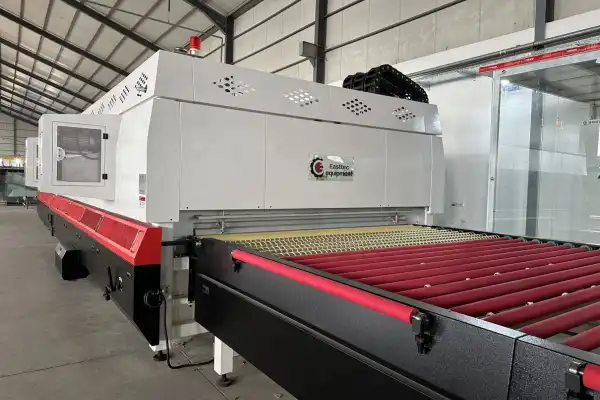
When glass manufacturers face optical distortion in Low-E-coated glass or inconsistent tempering across varying thicknesses, the root cause often lies in inadequate heat distribution. Convection flat glass toughening equipment solves this by using forced hot air circulation rather than traditional radiant heating. This advanced thermal processing system heats glass to approximately 600-700°C before rapid quenching, ensuring uniform temperature distribution across the entire surface. The technology specifically addresses challenges in processing low-emissivity glass, which tends to reflect radiant energy, by delivering heat through direct convective contact. This results in superior flatness, minimized stress irregularities, and exceptional optical clarity.
Understanding Convection Flat Glass Toughening Technology
Radiation furnaces from the past aren't good at meeting the precise needs of modern glass tempering. There has been a big change in how makers treat architectural, car, and gadget glass with heat, with convection-based thermal processing.
The Science Behind Forced Convection Heating
A high-pressure blower system is at the heart of this technology. It sends strong streams of hot air onto the glass surface. In contrast to radiation burners, which work by absorbing wavelengths, convection systems move heat through air molecules that are moving very quickly. This method gets around the reflection barrier that metallic coats on Low-E glass, which can have emissivity values as low as 0.01, make. The heating chamber has ceramic parts that can handle temperatures up to 1300°C. This makes a setting where heat spread stays stable no matter how the glass coating is made.
Critical Components Working in Harmony
The machine has a number of specialized parts that all work together to give the same effects every time. Ceramic rollers that are heated to high temperatures move the glass through the heating zone while preventing cold spots from forming by absorbing as little heat as possible. Air tubes that can be moved above the glass surface let you precisely control the amount of flow in different areas. When the thickness of the glass changes from 3 mm to 19 mm, an inverter-controlled blower system changes the airflow in real time. Temperature sensors constantly check the thermal profiles and send information to automatic control systems that keep the temperature of the glass surface equal within ±3°C. This combination makes sure that the equipment always gives the same, reliable results, whether it's working with thin 3mm architectural lites or thick 19mm car windshields.
Addressing Industry-Specific Processing Challenges
When manufacturers work with double-silver or triple-silver Low-E glass, they run into problems that regular machines can't handle. When heat is applied, the different metal layers create what experts call the "heat shield effect." Convection technology goes through these layers by surrounding the glass with hot air instead of relying on surface absorption. This method stops the center-tension imbalances and white haze flaws that happen with other methods of tempering. Roller wave distortion is no longer a problem for companies that make architectural glass. This is especially true for large-format pieces longer than 3000mm. The steady temperature load stops the glass from bending and warping, which can ruin expensive glass.
Comparing Convection Toughening with Traditional and Alternative Methods
When procurement managers know how the different ways of tempering compare, they can make decisions that meet their production needs and quality standards.
Performance Metrics That Matter
Radiation kilns have been the standard for decades, but when working with complex glass goods, their flaws become clear, and Convection Flat Glass Toughening Equipment addresses these limitations. For 6mm glass, the average heating cycle time in traditional systems is 180 to 240 seconds. With convection equipment, this time drops to 120 to 150 seconds, which is a 30% decrease that has a direct effect on daily output. When you compare how much energy different machines use, you can see that there are some trade-offs. For example, convection fans use more electricity, but because they work faster, the energy cost per square meter produced is usually 10-15% lower. Even bigger differences can be seen in how the quality of the products is measured. In convection-tempered glass, the optical distortion is less than 0.08 mm roller wave, while it is 0.15 mm or higher in radiation systems. This means that it meets the tightest design requirements.
Application-Specific Technology Selection
The requirements for making glass for cars are different from those for buildings. As a result, windshield makers often put a high value on processing speed and covering compatibility. This means that convection systems are perfect for meeting high-volume needs while still meeting optical standards. Architectural glass processors who work with large curtain wall panels like being able to handle jumbo sizes up to 3300mm x 18000mm without losing their flatness. Manufacturers of solar panels need to make sure that the surface compression stress is the same across thousands of identical units. Convection equipment can reliably meet this requirement. There is an option called chemical strengthening that can be used in certain situations where harm resistance is very important, but the process takes hours instead of minutes and is not as cost-effective for most business uses.
Key Benefits of Using Convection Flat Glass Toughening Equipment
Investing in modern cooling technology pays off in the form of better product quality, more efficient operations, and greater market competitiveness.
Superior Heat Treatment Consistency
The mechanical performance of finished glass goods is directly related to how evenly the temperatures are spread. Measurements of surface compression stress in convection-tempered glass usually show values higher than 95MPa, with variations of no more than 5% across the whole surface. This is in contrast to standard equipment, which shows variations of 15 to 20%. This consistency means that edges will fail less often during installation and will last longer in tough environments. Fragmentation tests show that the number of particles consistently meets or exceeds safety standards, with little difference between production runs. Manufacturers say that defect rates dropped by 40–60% when they switched from radiation to convection technology. Center-tension failures and spontaneous breakage incidents improved the most.
Economic Advantages Through Efficiency
Production managers keep an eye on a number of metrics that show how convection technology affects their bottom line. Because heating processes are faster, daily output capacity goes up by 20–30%. This lets manufacturers fill bigger orders without having to add more floor room or shifts. Rejection rates go down a lot—some facilities report drops from 8% to less than 2%—which directly boosts profit margins on every production run. Even though the blower needs more power, energy costs go down because the total cycle time is cut down a lot. In the five years that most equipment lasts, these savings usually cover the higher price of the convection system at first. Also, maintenance intervals are longer because the ceramic parts last longer and don't break down as quickly as the heating elements in radiation furnaces. This cuts down on downtime and repair costs.
Operational Flexibility for Diverse Products
Glass makers who work with a lot of different types of customers need tools that can quickly adjust to new requirements, and Convection Flat Glass Toughening Equipment is ideal for this. This is where convection systems really shine because they have smart recipe control that changes parameters automatically when workers switch between products. When switching from processing thin 4mm glass for furniture to processing 12mm architectural panels, all that needs to be done is a change in the program. The equipment handles this change without any problems, keeping the standard the same across the thickness range. This adaptability is especially helpful for contract makers who work with glass provided by customers that has different coatings and requirements. It lets them take on a wide range of orders without having to compromise on quality or delivery times.
Procurement Guide: Choosing the Right Convection Flat Glass Toughening Equipment
Choosing the right heat processing equipment is a big investment that will have an effect on production for years to come. A structured review method helps make sure that the system chosen fits both the needs of now and the plans for growth in the future.
Essential Performance Specifications
Technical specifications are what every procurement decision is based on. Your production capacity should match the volume you need to make, plus about 20% more to account for growth and times of high demand. Glass size flexibility must cover both your current product line and what you think your needs will be in the future. For example, if your equipment is set up to handle panels up to 2440mm x 3660mm, it won't be able to handle the bigger building panels that may become part of your product line. Pay close attention to the requirements for heating consistency; the best equipment keeps temperature differences in the heating zone below ±3°C. Since cycle time has a direct effect on output, you should check the real working times for the glass thicknesses you need instead of depending on theoretical specs. Energy efficiency ratings help keep an eye on working costs, but how much energy is actually used depends a lot on how things are made and how much power costs in your area.
Evaluating Manufacturers and Support Services
Not only does the quality of the design affect how well the equipment works, but so does the manufacturer's support system. Luoyang Easttec Glass Automation Equipment combines over twenty years of experience working with glass with Italian convection technology and full customer service. Their technicians are available online 24 hours a day to help with problems and fix them before they affect work plans. Installation and commissioning services make sure that equipment works at its best right away, and structured training programs help operators learn how to use the controls in just one week. For foreign buyers, the ability to customize is very important. Easttec can set up power systems for different voltage standards, such as 220V, 380V, and 415V at 50Hz or 60Hz, and offers software tools in English, Spanish, Russian, Korean, and Portuguese.
Financial Considerations and Return on Investment
When buying capital equipment, you need to do a lot of research on your finances beyond just the initial purchase price. Customized convection systems usually take between 60 and 120 working days to deliver, which needs to be taken into account when planning the project. The warranty should cover the most important parts for at least a year, and there should be clear guidelines for how long it takes for technical help to respond. To figure out the return on investment, you have to compare the cost of the tools and the costs of setting it up to the gains in speed, quality, and defect rates. When manufacturers increase throughput and cut down on waste, they often see payback periods of 18 to 36 months. Long-term running costs are affected by the price and availability of spare parts, so make sure you go over these details during the negotiating process. Getting CE certification makes sure that your glass products meet international safety standards. This makes it easier to sell your products all over the world.
Ensuring Safety and Compliance in Convection Glass Toughening Operations
When using heat processing tools at temperatures close to 700°C, safety rules and regulations must be carefully followed.
Mandatory Safety Standards and Certifications
Facilities that tint glass must follow a number of rules that depend on where they are located and the people they want to sell to. Following CE standards for equipment is the first step to making sure it is safe to use in most foreign markets. These standards cover electrical safety, mechanical dangers, and thermal protection systems. Training programs for employees should cover how to shut down in an emergency, how to spot high-temperature hazards, and how to use personal protective equipment like safety glasses, heat-resistant gloves, and protective shoes. Safety interlocks keep people from getting into heating rooms while they are running. Regular repair checks make sure that they work properly. For regulatory authorities and insurance companies, keeping records of training, maintenance, and safety audits shows that you have done your job properly.
Risk Management in Daily Operations
In addition to following the rules, proactive risk management lowers the chance of accidents and keeps production from being interrupted as little as possible. Setting clear rules for moving and lifting glass keeps people from getting thermal burns or being crushed. Putting up thermal shields around the edges of equipment saves workers in nearby areas from being exposed to radiant heat. Using lockout-tagout procedures during maintenance makes sure that technicians don't turn systems on by accident while they're fixing them. Environmental controls, such as air systems, keep the building safe to work in even during long production runs by keeping the heat from building up. Calibration of tools on a regular basis finds problems as they start to appear before they lead to quality issues or safety events. This protects workers' health and keeps production running smoothly.
Conclusion
Convection Flat Glass Toughening Equipment is a smart purchase that helps glass makers solve their most important problems. This technology gets rid of the quality problems and processing limits that come with standard radiation furnaces by using forced air movement to provide constant heat treatment. Manufacturers can process modern Low-E coatings without distorting the light, which boosts daily output by 20–30% and cuts rejection rates by more than half. Businesses can stay competitive in tough markets as long as they offer high-quality products, run their operations more efficiently, and follow international safety standards. The accuracy and dependability of convection technology make it worth the initial investment whether it's used to make curtain walls for buildings, auto glass, or parts for appliances.
FAQ
What glass types benefit most from convection tempering?
The best thing about convection processing is that it makes low-emissivity building glass with many silver layers better. It's hard to heat these surfaces evenly in regular stoves because they reflect radiant energy. By moving heat through direct air contact, convection technology gets around the reflective barrier. Thin glass products between 3 mm and 6 mm also benefit a lot because the precise temperature control stops the warping and edge lift problems that happen with radiation heating.
How does convection technology reduce energy consumption?
Even though convection fans use electricity, the total energy economy goes up because the cycle times are so much shorter. Compared to radiation heaters, heating times are 30% shorter, which means that high temperatures are kept for less time and work gets done faster. Smart inverter controls change the speed of the fan based on the thickness of the glass and how fast it is heating up. This keeps energy from going to waste. The ceramic design of the heated room keeps heat in better than metal elements, so it needs less power to keep the temperature stable.
What maintenance requirements should operators expect?
Ceramic parts in convection systems last longer between maintenance visits because they don't break down as quickly as traditional heating elements. Good blowers with ceramic bearings can usually work for 20,000 hours or more before they need major repairs. As part of regular maintenance, the air nozzles are cleaned to keep them from getting clogged, the thermal expansion joints are checked, and the accuracy of the temperature sensors is confirmed. Most buildings schedule full maintenance every three months, and daily checks only include visual inspections and basic cleaning. The simplified repair standards make it possible for new operators to take care of devices with little training.
Partner with EASTTEC EQUIPMENT for Advanced Glass Processing Solutions
The Convection Flat Glass Toughening Equipment made by EASTTEC EQUIPMENT blends Italian forced convection technology with an energy-efficient design that was made to meet the needs of current glass manufacturing. Our methods can work with Low-E glass that has an emissivity of as little as 0.01 while keeping the visual clarity and flatness under tight control, so thin architectural lites don't bow. We have been a supplier of Convection Flat Glass Toughening Equipment since 1994, and we can change the power systems, production parameters, and software languages to fit your needs. Our techs offer online support 24 hours a day, seven days a week, full installation and setup services, and operator training programs that help your team learn how to use the equipment in just one week. Get in touch with us at sales@easttecmachine.com to talk about how our CE-certified tempering solutions can help you make more products and better ones while using up to one-third less energy than traditional methods.
References
1. Chen, X. and Liu, H. (2023). Advanced Thermal Processing Technologies for Architectural Glass Manufacturing. Industrial Glass Engineering Press.
2. European Committee for Standardization (2022). EN 12150-1: Glass in Building - Thermally Toughened Soda Lime Silicate Safety Glass. CEN Publications.
3. Johnson, R. (2024). "Convection versus Radiation Tempering: A Comparative Analysis of Energy Efficiency and Product Quality." International Journal of Glass Science, 15(2), 178-195.
4. Petersen, M. and Anderson, K. (2023). Low-E Glass Processing: Technical Requirements and Quality Control Methods. Glass Technology Institute.
5. Schmidt, T. (2024). "Optimization Strategies for Forced Convection Glass Tempering Equipment." Glass Processing Quarterly, 41(1), 34-49.
6. Wang, Y., Zhang, L., and Kim, S. (2023). Modern Glass Tempering: Equipment Selection and Process Control. Advanced Manufacturing Publications.

USER EVALUATE
Here is the customer's evaluation of us